The Alan Godfrey Abduction Case, 1980

The 1968 Futuro House—a flying-saucer-shaped prefabricated dwelling originally intended as a skiing cabin—was the brainchild of Finnish architect Matti Suuronen. Made of pre-cast fiberglass-reinforced polyester plastic elements that could be assembled on site, the Futuro was designed to be easy to construct and heat in rugged environments…

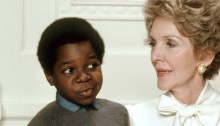
Nancy Reagan Appears on ‘Diff’rent Strokes’, 1983

As part of her anti-drug Just Say No campaign, First Lady Nancy Reagan made a guest appearance on the NBC sitcom Diff’rent Strokes (1978-1986) on March 19, 1983. In the episode, titled “The Reporter,” Arnold Drummond (Gary Coleman), a reporter for his school newspaper, breaks a story on drug pushers at his school and submits it to a major city newspaper…

LJN Toys Catalog, 1987

Toy guns have existed in the United States for nearly 150 years, becoming a niche market in the ’30s and ’40s following the popularity of Hollywood gangster pictures and The Lone Ranger serial. After the U.S. entered World War II, the market became an industry, and sophisticated new designs proliferated until the late 1960’s…

Cannon Films Print Advertisements in ‘Variety’, 1979 – 1986

In 1979, Israeli film industry giants (and cousins) Menachem Golan and Yoram Globus purchased tiny independent American film production house Cannon Group, Inc. Cannon had spent the ’70s producing B-movies with occasional surprise hits (like the 1970 “hardhat revenge” tale Joe starring Peter Boyle). Golan and Globus saw in Cannon a way to gain a foothold in an American market that they’d long eyed entering…

The Abominable Snowman Debuts at Disneyland, 1978

Walt Disney got the idea for the Matterhorn Bobsleds attraction while on location in the Alps during the filming of Third Man on the Mountain (1959). He bought a postcard featuring the Matterhorn, one of the three highest north faces of the alps, and wrote a one line message to Disneyland engineer and art director Vic Greene: “Vic, build this! Walt.”

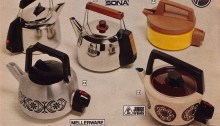
Argos Catalogue Kettle Pages, 1976/1985

Throughout the ‘70s and ‘80s, retail catalogues were a familiar sight in savings-conscious lower-middle-class and working-class British homes. While companies like Kays, Littlewoods, and General Mills specialized in clothing and delivered customers’ purchases to their doors, Argos pioneered a new form of catalogue retail where customers made their order in one of the company’s high-street shops before waiting for their items to be brought out from the warehouse at the rear…