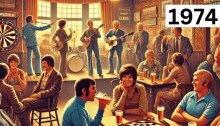
Ain’t No Golden Age: On the Banality of Nostalgia Memes
By The Mutants
The image is important because it captures something desperately tragic about where we’re at and how we see ourselves…
By The Mutants
The image is important because it captures something desperately tragic about where we’re at and how we see ourselves…
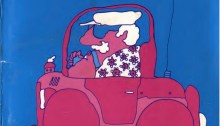
The CB fad of the 1970s entered the public consciousness through a series of economic, political, and technological circumstances. The 1973 oil crisis, which put long-haul truckers in a tough spot due to gas shortages, along with the new federal 55 mile-per-hour speed limit, made CB radio a key method of information dissemination for truckers in a newly hostile economic environment…
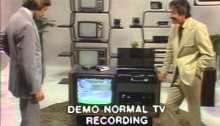
Sony’s first Betamax VCR was the SL-6200, and it was housed in a teak wood cabinet with a 19″ Trinitron TV. The LV-1901 console, as the package deal was called, was released in Japan in May 1975 and debuted in the US that November. Price: between $2,295 and $2,495. Weight? Really fucking heavy…

U.S. Space Camp was inspired by Saturn V designer Werner von Braun—a longtime advocate of a “public program for space science education”—and pioneered by Edward O. Buckbee, a NASA public relations specialist and director of the U.S. Space & Rocket Center in Huntsville, Alabama, the location of Space Camp since its inaugural session in 1982…

In April 1977, computer enthusiasts gathered in San Francisco for the inaugural West Coast Computer Faire. (The quirky spelling of the word “Faire” evokes another nerdy subculture born in California: the Renaissance Faire.) Two personal computers that would go on to dominate the first half of the red-hot PC market in the 1980s had their debut that year: the Commodore PET and the Apple II…
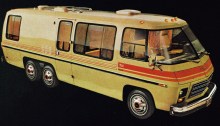
Combining the insular self-sufficiency of a lunar module with the intimidating bulk of a futuristic tank, the GMC Motorhome was the perfect attack vehicle for the leisure wars of the 1970s when—encouraged perhaps by the hermetic novelties of the space race—the recreational activities of the wealthiest fragment of the planet began to reflect a growing preoccupation with what we might call modular living…
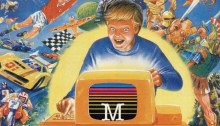
In 1984, I knew with absolute certainty that my life was about to change. The arrival of a paradigm shift had been announced to me through the pages of Your Computer magazine, and the tawdry provincial realities around me were soon to disperse like fag smoke on the breeze, making way for an exciting new existence whose structure would be hewn out of glowing, chirping digital matter…
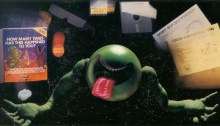
I first encountered Douglas Adams’ Hitchhiker’s Guide to the Galaxy book series in 1985. I’d caught glimpses of the tatty-yet-much-loved BBC television series from 1981 on my local PBS station, and that sent me to the bookstore to find out what the heck this British science fiction comedy was all about. Over the summer of 1985 I tore through the paperback versions of the first three volumes in the series…

Dolphins, of course, were not the only cetaceans that were of concern to environmentalists in the ’70s and ’80s. Whales, the victims of a mass, human-engineered extinction since the Age of Sail, were also being studied, the intelligence in their massive brains quantified…

From the 1960s on, we saw a kaleidoscope of depictions of dolphins and whales in novels, films, and television as wise, immanent intelligences: co-existing on a planet with the rapacious homo sapiens, yet somehow more worldly and wise than the “superior” species…
 We Are the Mutants