The Music the Machines Make: ‘Systems of Romance’ by Ultravox

By K.E. Roberts

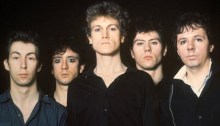
London’s Ultravox was John Foxx’s band for three increasingly brilliant albums. Their debut, 1977’s Ultravox!, is an uneven but essential distillation of Roxy Music, art-rock-era Brian Eno (who produced, along with Steve Lillywhite), prog, minimalist electronica, and dub. The same year’s Ha!-Ha!-Ha!, on the other hand—a mere eight months separated the albums—is a focused and unsparing gnashing of teeth…

Commies, Devils, and Mind Control: How the Christian Right Invented Satanic Backmasking

By K.E. Roberts

Rock and roll was maligned as an “unholy pleasure” almost from the get-go, just as dancing was decried as the “Heritage of Hell” centuries before. After John Lennon declared the Beatles “more popular than Jesus” in 1966, Christian fundamentalists immediately condemned all music that “aroused the lower instincts,” and the smear campaign would last for more than a quarter-century…

Caedmon Records Audiobooks, 1967 – 1984

Caedmon’s vast catalogue of abridged texts—read by acclaimed actors or by the authors themselves—was hugely eclectic, ranging from Pakistani actor Zia Mohiuddin reading selections from the Bhagavad-Gita and Colette reading passages from her Gigi and Cheri to Rainer Maria Rilke reading his poetry in the original German, Boris Karloff reading Three Little Pigs, and Eartha Kitt reading a selection of African folk tales…

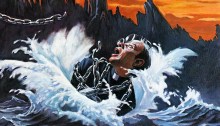
“A Never-Ending Wheel”: The Heroic Quest in Dio’s ‘Holy Diver’

By Michael Grasso

Ronnie James Dio broke out in a big way in the spring of 1983 with the release of his solo debut LP, Holy Diver. Formerly the lead singer for heavy rock/metal pioneers Elf, Rainbow (Ritchie Blackmore’s followup project to Deep Purple), and Black Sabbath (joining the band after it parted ways with Ozzy Osbourne), Dio brought to his new eponymous project over a decade of experience as a foundational heavy metal vocalist and lyricist…

K-tel Music Compilation Commercials, 1970 – 1984

Television advertising in the 1950s took a fairly staid and classic form: the advertising agency would spend 30 to 60 seconds presenting a domestic problem that its client’s product promised to alleviate. But the dawn of the 1960s introduced a more aggressive, hard-sell type of direct advertising, where the product’s manufacturer would sell a product directly to the TV viewer through product demonstrations…