Lunar Mine by ’89: ‘Spaceships of the Mind’ by Nigel Calder, 1978

Spaceships of the Mind was a book tie-in to a BBC series first broadcast in the summer of 1978 and hosted by pop science writer and television host Nigel Calder (1931 – 2014), who was part of the founding masthead of the influential pop science journal New Scientist (founded in 1956). The series consisted of three episodes, each focusing on a different aspect of space colonization, exploration, and survival as the field stood at the time…

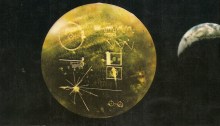
‘Murmurs of Earth: The Voyager Interstellar Record’, 1978

Murmurs of Earth was published the year after the 1977 launch of the twin space probes Voyager 1 and Voyager 2. While the Voyager program’s primary mission was to survey, photograph, and analyze the planets of the outer solar system, the book focuses on our attempts to communicate with whatever intelligent entities might encounter the probes as they flew headlong into the interstellar night…

TI-99/4A Computer Books, 1983 – 1987

Texas Instruments (TI), which had pioneered both pocket calculators and speech synthesizer technology in the 1970s, released its TI-99/4A home computer in 1981. After the release of its first personal computer, 1979’s TI-99/4—a fairly substantial commercial disaster—TI went back to the drawing board to produce a home computer that was cheaper, easier to use…

K-tel Music Compilation Commercials, 1970 – 1984

Television advertising in the 1950s took a fairly staid and classic form: the advertising agency would spend 30 to 60 seconds presenting a domestic problem that its client’s product promised to alleviate. But the dawn of the 1960s introduced a more aggressive, hard-sell type of direct advertising, where the product’s manufacturer would sell a product directly to the TV viewer through product demonstrations…

Earth, Wind & Fire Panasonic Boombox Commercials, 1980 – 1983

At the dawn of the 1980s, soul-funk-disco orchestra Earth, Wind & Fire (EWF) were at the top of their game. They’d just released their LP I Am (1979), which featured hit single “After The Love Has Gone,” and double-album Faces (1980). Both albums came close to hitting number 1 on the US pop charts and solidified the band’s already-solid reputation as reliable hit-makers…

George Plimpton Advertisements for Intellivision, 1980 – 1983

The intersection of literary gadfly George Plimpton (1927-2003) with the Mattel Intellivision video game console (introduced in 1980) seems a very strange fit on the surface. Plimpton acted as Intellivision’s pitchman throughout the early 1980s in a series of print and television advertisements, his stentorian tones touting Intellivision’s superiority to industry juggernaut Atari…

BBC Handbook, 1965

The BBC Handbook was published annually beginning in 1928 to inform the British public about the work being done by its national broadcaster. Under one cover and written in a straightforward prose style, a reader could find the Beeb’s technical broadcasting details (including the exciting new vistas opened up by Telstar and other communications satellites)…