
Sister Lovers: The Curse of Queerness in ‘Ginger Snaps’
The tragedy of Ginger Snaps, in fact, is that patriarchy makes queerness unspeakable and unthinkable. As a result, the film can imagine no future for women in patriarchy other than death…
The tragedy of Ginger Snaps, in fact, is that patriarchy makes queerness unspeakable and unthinkable. As a result, the film can imagine no future for women in patriarchy other than death…
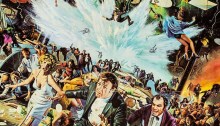
I started watching (mostly rewatching) disaster movies old and new about a week into lockdown, which I suppose makes perfect sense. The genre turns on spectacle and catharsis, but it also pacifies: no matter how bad the real world gets, it could always get worse—so be grateful that it’s not worse…

By M.L. Schepps
At the break of dawn upon the beach, a thousand representatives of the “Female Planet”—ranging from white-clad Canbomblé, damp in honor of the ocean goddess Yemoja, to realtors from Anchorage—raised mirrors to the pallid sky, seeking to reflect the light of their hope towards the sprawling Riocentro Convention Center…

Classic episodes of The Twilight Zone (1959-1964) follow a simple formula. An ordinary person experiences something extraordinary, and we follow along as they figure out what is happening. Very often, the story ends with a twist: the cross-country traveler has been dead all along, the aliens are actually astronauts…

The 1970s have always occupied a grim place in the British imagination. Sandwiched between Harold Wilson’s utopian “Swinging Sixties” and Thatcher’s anti-social eighties, the decade represents a time of tremendous turbulence…
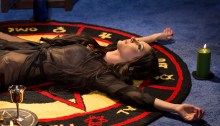
“Men are like children; they’re very easy to please as long as we give them what they want,” declares sultry young witch Elaine Parks (Samantha Robinson) to her friend Trish (Laura Waddell) in Anna Biller’s 2016 film The Love Witch…
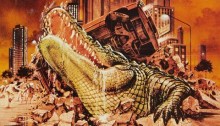
Steven Spielberg called Joe Dante’s 1978 Piranha “the best of the Jaws ripoffs,” but my vote goes to 1980’s Alligator, directed by Lewis Teague and distributed by Group 1 Films, the latter responsible for some memorable exploitation fare that included The Clonus Horror, UFO’s Are Real (both from 1979), and Albert Pyun’s The Sword and the Sorcerer (1980)…

By Eve Tushnet
In 1983, Lizzie Borden attacked the World Trade Center. I’m talking about Lizzie Borden the film director, and the bomb that goes off at the top of the Twin Towers is the final image of her punk feminist film Born in Flames. (It’s safe to say that the shock of the ending has not been diminished by the passage of time.)

By Audrey Fox
The ever-widening division between social classes has always been popular fodder in film and television. It seems as though few films that address class disparity can escape at least some oblique commentary that casts the wealthy elite in a negative light. From the early days of cinema with Erich von Stroheim’s Greed (1924) and Frank Capra’s It’s a Wonderful Life (1946)…
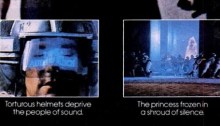
Only in a decade as contradictory as the 1980s would one of America’s most respectable and historic companies spend nearly a million dollars on a commercial depicting new wave “adventurers” in a post-apocalyptic “third millennium” wasteland as part of a last ditch campaign to save its fatally outmatched consumer electronics line…

