“The Right of All Sentient Beings”: The Transformers (Generation One)

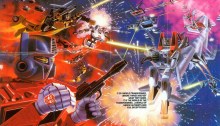
Christmas, 1984. It was a hell of a time to be a kid. We’d reveled in seven years of Star Wars and Star Wars toys, G.I. Joe: A Real American Hero (also Hasbro) and Mattel’s Masters of the Universe franchises launched in 1982, using Lucas’s simplistic moral universe as a backdrop, and then Hasbro struck again with these diecast shape-shifting robots yanked from Japanese company Takara…
Metal Mickey, 1978 – 1983

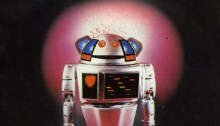
After first appearing as a recurring character on British children’s TV show The Saturday Banana and scoring a hit record with his 1978 novelty cover of “Lollipop,” five-foot-tall remote-controlled robot Metal Mickey caught the eye of LWT producer Humphrey Barclay, who commissioned a self-titled spin-off series…

George Plimpton Advertisements for Intellivision, 1980 – 1983

The intersection of literary gadfly George Plimpton (1927-2003) with the Mattel Intellivision video game console (introduced in 1980) seems a very strange fit on the surface. Plimpton acted as Intellivision’s pitchman throughout the early 1980s in a series of print and television advertisements, his stentorian tones touting Intellivision’s superiority to industry juggernaut Atari…

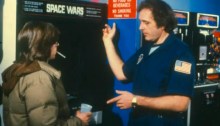
Spaceport Employee Training Video, 1981

Spaceport was an East Coast mall arcade chain active in the early 1980s, competing with Time Out and Aladdin’s Castle. The interior was designed to resemble the inside of a spacecraft, with “escape hatches” protruding from the ceiling, cylindrical “E.V.A boosters” lining the walls, and various future-forward portals and struts…

Quickshot Joysticks, 1982 – 1988

As sophisticated new electronic entertainments entered the lives of increasing numbers of people during the 1980s, sophisticated new interfaces were designed to utilize these entertainments—and capitalize on them—to their fullest potential. The joystick was invented originally to satisfy the need to control movement in three dimensions following the invention of the aircraft in the early 20th century…

Adventures in Atari BASIC: Lesson Six – Enemies and Earthquakes

By Mikey Walters

In Lesson Five, we learned about Space Assault’s “main loop” and how game events quickly occur in succession to give the appearance of happening simultaneously. We also handled the actions of our human player, such as moving the crosshair via joystick and firing the Fission Gun Tower. Now it’s time to give the Clovis Aliens their due, so let’s code their relentless, earthshaking attack!

SNIKT: Comic Book Sound Effects, 1939 – 1985

Sequential art goes all the way back to cave paintings, and word balloons start to appear in political cartoons in the late 1700s, but the combination of the two in newspaper comic strips was a late 19th century development, spurred by the “circulation war” between Joseph Pulitzer’s New York World and William Randolph Hearst’s New York Journal

BBC Handbook, 1965

The BBC Handbook was published annually beginning in 1928 to inform the British public about the work being done by its national broadcaster. Under one cover and written in a straightforward prose style, a reader could find the Beeb’s technical broadcasting details (including the exciting new vistas opened up by Telstar and other communications satellites)…

Channel 4 Ident, 1982

By the early 1980s, the creation of a fourth British television channel had become a moot issue. In 1955, the license-fee-funded BBC1 had been joined by the commercial Independent Television network (ITV), legally identified as Channel 3, and in 1964, these two were joined by BBC2, the first European television channel to broadcast regularly in color…