Kids Discorporated: ‘Sixth Sense’ by Larry Kettelkamp, 1970

Hundreds of books on various psychic phenomena—both surveys and how-to manuals, sometimes both—were released throughout the 1960s, as the paranormal, especially ESP, began to be taken seriously by academics and the American and Soviet intelligence communities. What makes Sixth Sense notable, apart from a convincing cover illustration, is that it’s essentially a kid’s book…
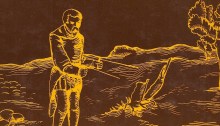
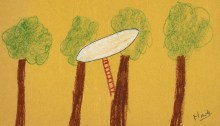
Sticks and Stones: ‘Dowsing and Archaeology’ and ‘Site and Survey Dowsing,’ 1980

These two odd little volumes were discovered a few months ago in an antiquarian book shop in Canterbury, UK. Published by the British Society of Dowsers in 1980, Dowsing and Archaeology and Site and Survey Dowsing collectively offer a few dozen short articles, culled from the annals of the Journal of the British Society of Dowsers over the half-century leading up to 1980. As the book titles make clear, these articles take dowsing past its usual folk magic remit of finding sources of water and into territory usually ceded to archeologists or metal detectorists: finding ancient objects and the outlines of ancient structures…

‘UFO Drawings From The National Archives’ by David Clarke, 2017

A recent spate of books have sought to analyze the visual culture of 20th-century ufology. 2016’s Flying Saucers Are Real!, which featured the archive of science fiction writer and amateur UFO material collector Jack Womack, offered richly-drawn, full-color images of UFO culture from every decade of the phenomenon. What Flying Saucers Are Real! did for American ufology, David Clarke’s UFO Drawings From The National Archives does for the United Kingdom…

One Step Beyond: ‘Alpha: Probing the Paranormal’, 1979 – 1980

In one of the first episodes of BBC Scotland’s epochal 1979 paranormal drama series The Omega Factor, the program’s psychic protagonist can be seen sitting in his modish Manchester flat, leafing through a magazine with an aquamarine cover. The cover illustration shows a trombonist, the tubes of his instrument drooping in an evocation of psychokinetic metal-bending. That magazine was Alpha…

Selling the Idyll: Christmas Greeting Cards, 1950 – 1980

Christmas cards became ubiquitous in the post-war era, when millions of Americans retreated to a more secluded existence in the rapidly developing suburbs. As small towns—idealized by Frank Capra and Norman Rockwell, among others—started to be displaced by tract housing complexes and chain stores, embellished scenes of the vanishing idyllic communities became a standard trope on greeting cards…

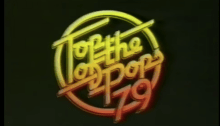
‘Top of the Pops’ Christmas Special, 1979

For the pop-minded inhabitant of the British Isles in the late ’70s, the dull edifice of the passing weeks rested upon the two mighty, glowing columns that made it all bearable: the British Top 40 countdown, broadcast from 5:00 on BBC Radio 1 every Sunday evening (cancelled only once as a result of what would prove to be an inexplicably traumatic event for the nation: the 1997 death of Lady Diana) and Top of the Pops…