Texas Instruments SR-52 Programmable Calculator, 1975

As the microchip revolution took root in the late 1960s, one of the most obvious uses for the new miniaturization was in the field of mathematics. Digital computers’ original tasks had, of course, been related to calculating much faster than deskbound human beings. The power of a once-massive digital computer transferred to a handheld device would allow for a revolution in calculation, allowing mathematicians of all stripes, from accountants to engineers, to free themselves from lengthy and difficult slide rule calculating…
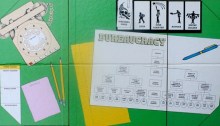
‘Bureaucracy’ Board Game, 1981

In Avalon Hill’s Bureaucracy, players attempt to “simulate the bureaucratic behavior which constitutes so much of what we call government” and “[rise] up through the masses” to become Director, which amounts to marching around a Monopoly-style game board seeking promotion…

‘Star Wars: Escape from Death Star Game’, 1977

During the holiday season of 1977, kids were desperate for Star Wars toys. Unfortunately, Kenner couldn’t ramp up toy production fast enough (leading to a groundbreaking marketing maneuver: the Early Bird Certificate Package), so there were very few Star Wars-related items available for parents to put under the Christmas tree…

‘Disaster/Désastre’ Board Game, 1979

Disaster, created by American board game titan Parker Brothers for the Canadian market, transposes nearly every cinematic disaster scenario of the 1970s—the Decade of the Disaster Movie—onto the game board. Disaster films usually consisted of a huge ensemble cast, uniting current Hollywood stars with has-beens and stars of yesteryear, and they “explored” a common theme: the implacable destructiveness of nature and the inability of human structures to protect against it…

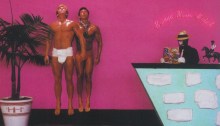
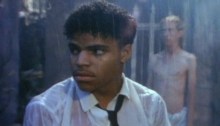
‘Somebody’s Watching Me’ by Rockwell, 1984 (Music Video)

Rockwell, born Kennedy William Gordy, is the son of Motown founder Berry Gordy. Despite his father’s discouraging comments regarding his early songs, Kennedy wrote “Somebody’s Watching Me” in 1983 and submitted a demo to Motown under the name Rockwell because, as he claimed later, he didn’t want his father’s legacy to influence his success…

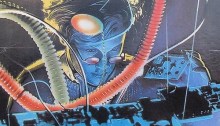
‘Radio Silence’ by Thomas Dolby, 1982

Thomas Dolby (born Thomas Morgan Robertson, he took the stage name Dolby from a nickname he received as a studio recording obsessive) burst onto the music scene in 1981 at the forefront of the new wave of post-punk bands using electronic instrumentation in the UK…