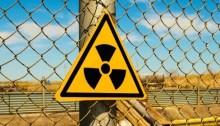
The International Radiation Symbol, 1946
The International Radiation Symbol or Ionizing Radiation Trefoil Warning Symbol was created at the University of California Berkeley Radiation Laboratory in 1946…
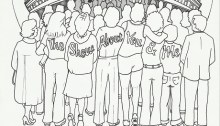
This advertisement for the 3rd Festival for Mind Body Spirit appeared in Alpha magazine (subtitled “Probes the Paranormal”) in 1979. Its promise of “Psychic phenomena, UFO’s [sic], Earth Mysteries and more” was a slight shift in emphasis from the event’s official poster…
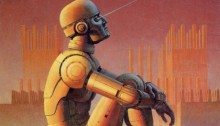
In 1989 veteran illustrator and concept designer Ralph McQuarrie was commissioned to produce a series of illustrations for Isaac Asimov’s Robot Visions, a collection of essays and short stories and a companion volume to Asimov’s 1986 short story collection Robot Dreams…
After a partial nuclear meltdown occurred at the Three Mile Island nuclear power plant only days before the release of a 1979 film discussing just that possibility, the term “China Syndrome”—used by nuclear power experts to describe a hypothetical scenario in which an overheating reactor core melted its way to the other side of the planet—quickly passed into common usage…
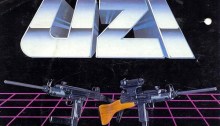
Immortalized when one appeared in the hands of U.S. Secret Service Special Agent Robert Wanko during John Hinckley Jr.’s 1981 attempt to assassinate President Reagan, the Uzi—a submachine gun designed by German-born Israeli Uziel Gal, from whom it took its name—was sold to more law enforcement and military markets than any other weapon in its class…
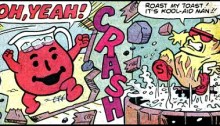
Kool-Aid was invented in Hastings, Nebraska in 1927 in the kitchen of salesman and inventor Edwin Perkins, who took one of his fruit juice patent recipes and dehydrated it. In 1953, Perkins sold the Kool-Aid recipe to food conglomerate General Foods (which had already gobbled up prominent brands Jell-O and Maxwell House in the 1920s), and thus began Kool-Aid’s ascent to nationwide fame…
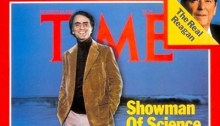
On September 28, 1980, the 13-part television series Cosmos: A Personal Voyage debuted on hundreds of public broadcasting stations across America. The show was a huge success, bringing in some of PBS’s best ratings ever…
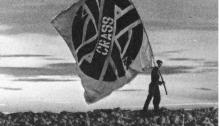
This striking logo, which blends symbols of perceived authority including the Christian cross, the swastika, the Union Jack and the ouroboros, was the logo of anarchist art-punk collective Crass…
This pair of campaign buttons illustrates the turmoil within the Democratic Party during the 1980 U.S. presidential election. Incumbent Jimmy Carter faced an insurgent, left-wing opponent in the form of Massachusetts Senator Ted Kennedy…
Edited by Yorkshireman Dez Skinn—the self-styled “British Stan Lee”—and published by his company Quality Communications, Warrior was a 26-issue British comic featuring work by both well-known and up-and-coming artists and writers…