
No Powerful Idea Lasts Long: The Memphis Group and the Look of the ’80s
Of the many cultural tributaries that flowed together into what we now think of as the visual aesthetic of the 1980s, one of the most prominent must be the Memphis Group…
Of the many cultural tributaries that flowed together into what we now think of as the visual aesthetic of the 1980s, one of the most prominent must be the Memphis Group…

The promotional artwork used on genre film posters, and later on VHS packaging, was often more important for establishing a foothold in the popular imagination than the films themselves. This was especially true in the Italy of the 1980s, where a thriving and competitive cinema industry was increasingly looking to the opportunities offered by foreign markets and the burgeoning home video trade…
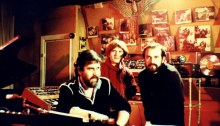
This atmospheric piece, which would later be given the name “In London,” was part of an improvisation session featuring Greek synthesizer musician Vangelis and Spanish electronic group Neuronium. Filmed in 1981 for Spanish TV program Musical Express as part of “Serie Amigos” (the “Friends Series”), the performance was recorded at Nemo, the London recording studio that Vangelis had established in 1975 and where he would continue to work until 1983…
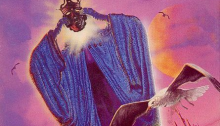
When it was first published in 1982 by Puffin Books, the children’s imprint of Penguin Books, copies of adventure gamebook The Warlock of Firetop Mountain came with a bookmark announcing “The Great Warlock of Firetop Mountain Competition.” The book’s authors were Steve Jackson and Ian Livingstone, the co-founders of Games Workshop…
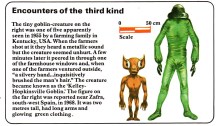
The mandate of British publisher Usborne Books was to produce beautifully illustrated children’s publications, designed and written by its in-house team. The first wave of books Usborne released in 1975—which included the popular Spycraft—had sold well, and in 1977 the company followed it up with the World of the Unknown series: a triptych that included Monsters, Ghosts and UFO’s…
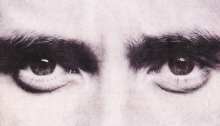
One of the best parts of starting We Are The Mutants (nearly two years ago now!) has been becoming friends with my co-editors and learning about all the things that they find interesting. So when Richard and I first started talking about our shared, unabashed mutual love of Phil Collins, it was like I’d finally found a kindred spirit…
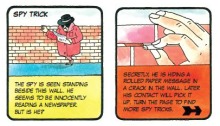
During the Cold War, a new archetypal establishment role joined the pantheon of soldiers, cowboys, and cops that often peopled children’s games: the spy. Equipped with false identities, given to using hidden surveillance devices, and communicating in strange codes, this newcomer was perfectly suited to the duplicitous, mistrustful mood that was the constant background noise of the times…
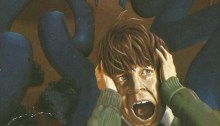
It’s one of the peculiarities of SF literature—and perhaps of genre writing in general—that the imagery generated to sell and promote it has often proved to be more visionary and transformative than the writing itself. Serious-minded SF fans are often heard complaining about this irony, claiming (not without some justification) that Star Wars, say, is not actually science fiction but rather fantasy, or just straight-up infantile dross…
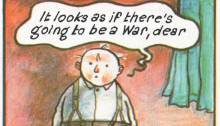
As the nuclear crisis between the Western powers and the Eastern Bloc deepened, and the Bulletin of the Atomic Scientists‘ Doomsday Clock stood at four minutes to midnight, perplexed children across Great Britain were treated to the release of When the Wind Blows, a graphic novel by British artist Raymond Briggs that narrated the aftermath of a nuclear attack from the perspective of the Bloggses, a working-class couple who have recently retired to the country…
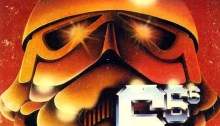
In 1976, the year after the death of Spanish military dictator Francisco Franco, Barcelona publisher Ediciones Martínez Roca launched its Colección Super Ficción series—an eclectic selection of science fiction novels—with Los Hijos de Nuestros Hijos, a Spanish translation of Clifford Simak’s Our Children’s Children…
 We Are the Mutants