By Richard McKenna / May 14, 2026
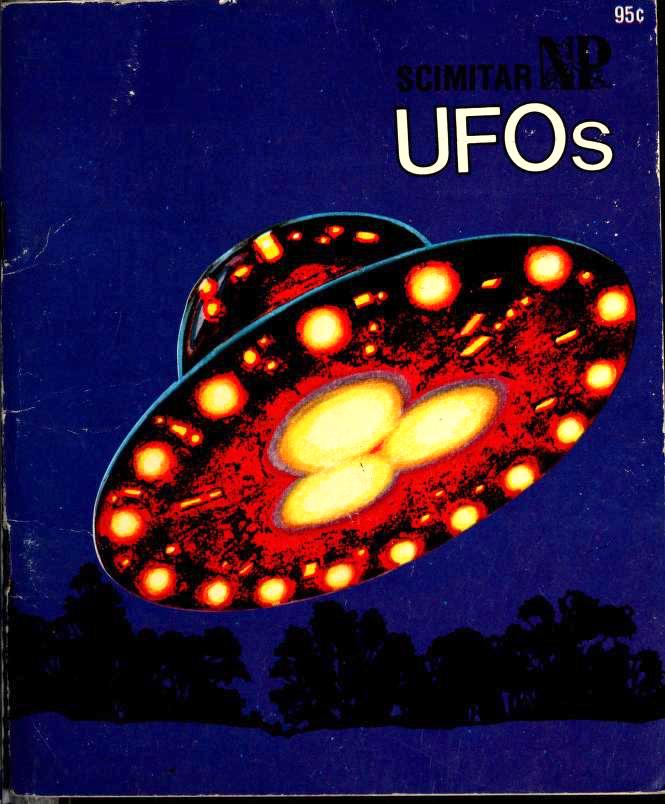
Object Name: UFOs
Maker and Year: Originally published by Archon, 1978. This edition Nutmeg Press, 1979
Object Type: Book
Image Source: archive.org
Description: (Richard McKenna)
I’m not sure if it’s possible from the standpoint of the present day to grasp just how deeply enmeshed in everyday life the paranormal was throughout the 1970s and ‘80s. And not just as an abstraction or some fad the kids were obsessing over; it’s more like the way that today things like crypto or AI are simply part of the weave and weft of the fabric of daily existence, reified into reality even for people who aren’t interested in them and don’t believe they’re a real thing.
I don’t know if the sainted Socialist paradise of South Yorkshire where I grew up was a particularly paranormal-credulous part of the world, but I certainly wasn’t the only kid who thought it was entirely normal to hear the builders I passed on the way to school discussing the Yeti, or who was nearly roped into an alien-worshipping cult after unwarily approaching the cool-looking lady with the black polo neck and weird necklace who had a table at the bookshop in Sheffield, or who knew a kid whose bus driver dad had seen strange lights in the sky one night.
In my memory of the time, these were constants. Granted, I was so obsessed with it all as a child that it’s hard to tell if my perceptions are skewed, but a quick straw poll of friends of a similar age seems to confirm my impression: flying saucers, bigfoot, ghosts, the Bermuda triangle, spoon bending, ESP, big cats, fairies, spontaneous human combustion, the Loch Ness monster, gods from outer space, and reincarnation were an incessant background hum in all our lives. Marginal, perhaps, but constantly there in the TV shows, the comics, the news, the conversations. Obviously, the paranormal still attracts interest today, but the modern iteration exists in a post-X-Files, post-internet world where it’s just one of the strange distractions competing with a million other disconcerting narratives in a world where the guy from Blink 182 became our Jacques Vallée.
After ghosts, the most pervasive manifestation of all this in the UK and US has probably been UFOs, whose cultural ubiquity began building in the 1940s (or when humans first saw lights in the skies, depending on who you believe), and whose strange luminous forms and confusing behaviors were violently codified in the popular culture with the 1977 release of Close Encounters of the Third Kind, at a time when UFO sightings were practically a daily event. Were these alleged preternatural incidents something to do with a search for the transcendent and unknowable in the face of the ongoing collapse of religious belief in the West? The same drive that was pushing the outré weirdness of the New Age further and further into the mainstream?
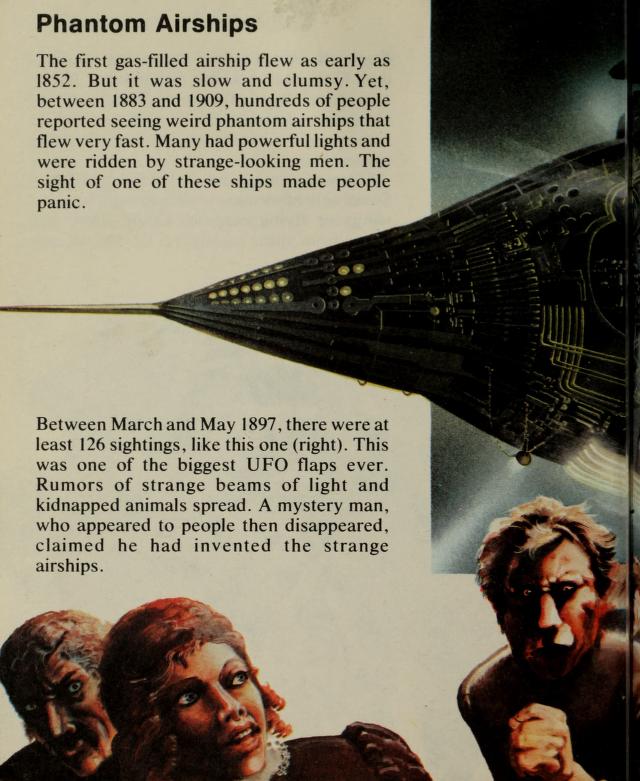
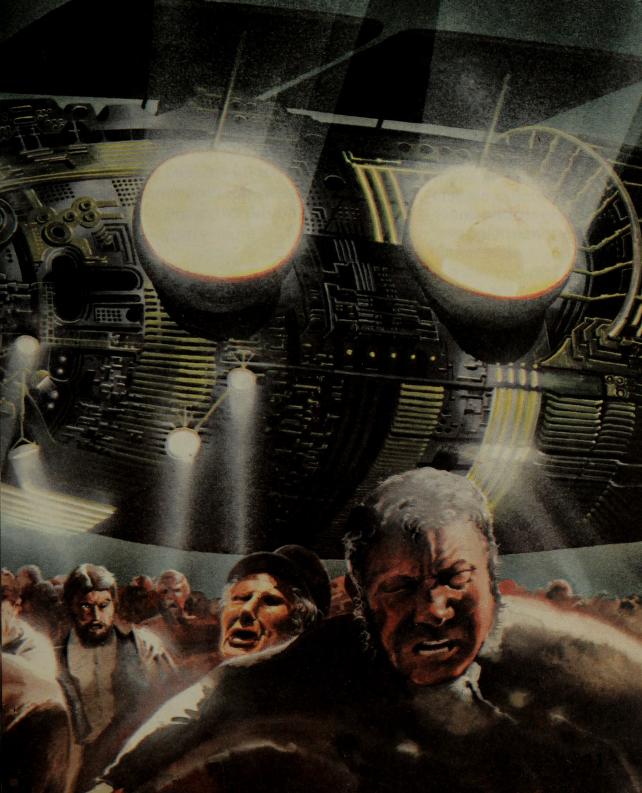
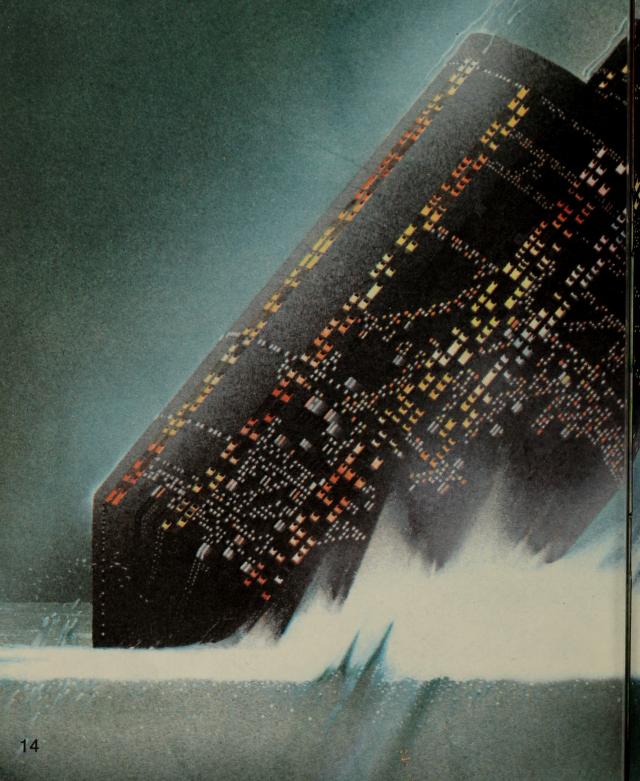
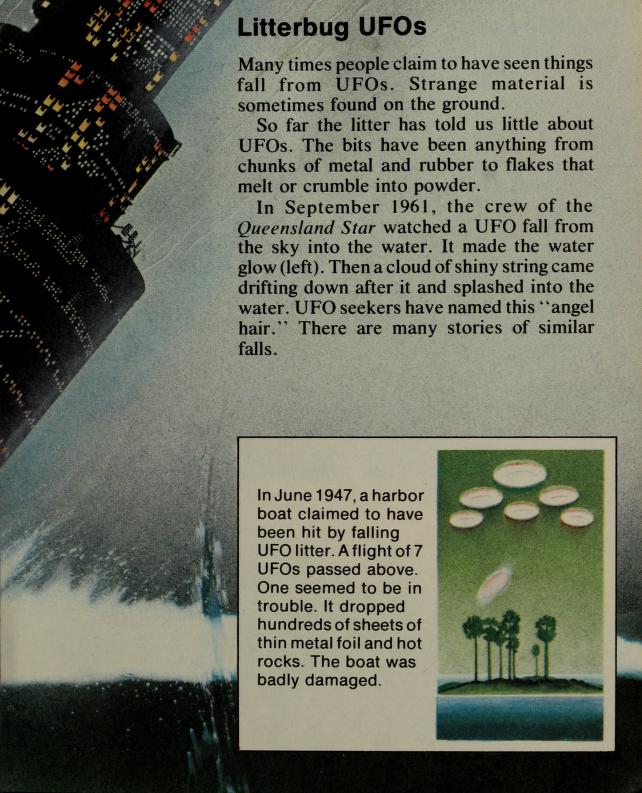
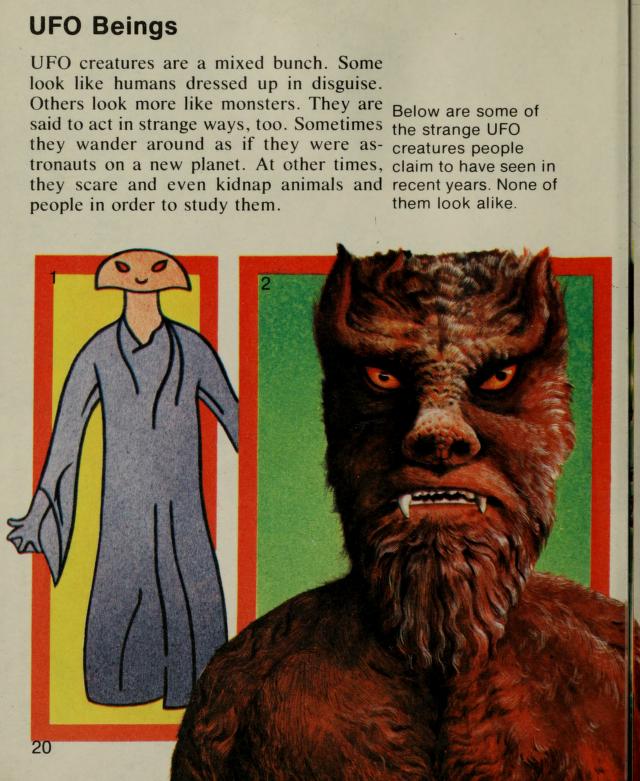
Maybe. But whatever it was, it inspired its own equivalent of religious art, some of it as powerful as—or perhaps even more so than—the stuff sanctioned by the religions proper. Not religious art in the sense that it transmitted any theist message, but in the way that the reams of strange imagery the zeitgeist of the day inspired feel like they have much more in common with the surreal and awe-inspiring visions of the Old Testament or the Popol Vuh, say, than it does with the scientific pretensions of your J. Allen Hyneks or your Stanton T. Friedmans.
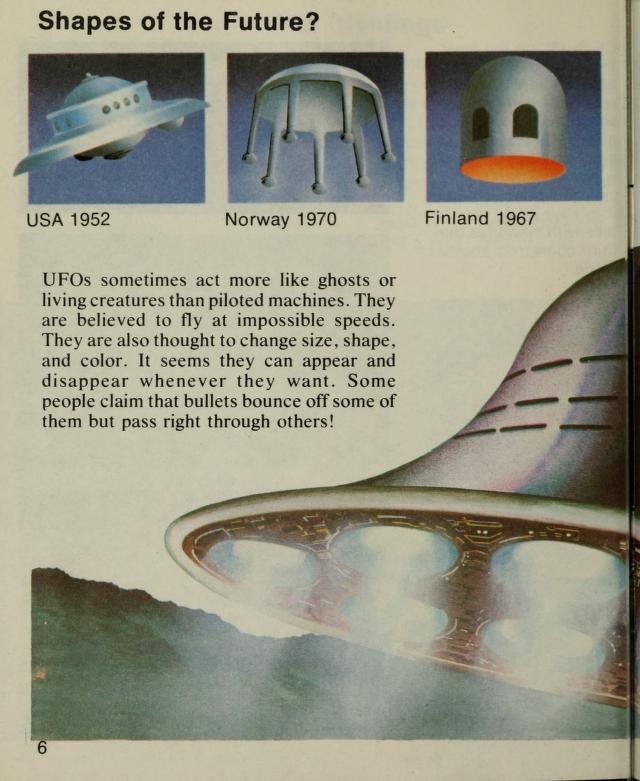
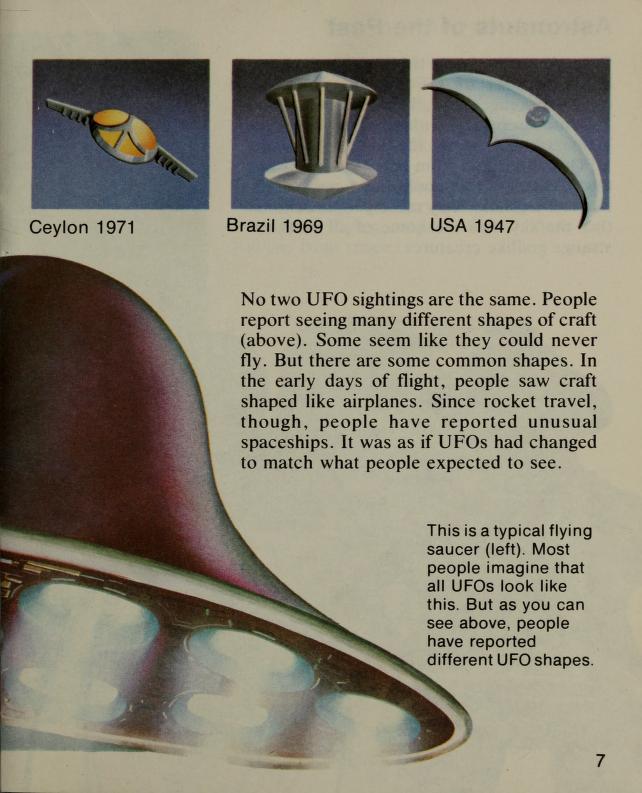
The platform for these visions wasn’t cathedral windows or the walls of aristocratic palazzos, but often a much less exalted venue: the seemingly endless stream of children’s books about UFOs. Kids were often the main target of their visual expression, and though the books that contain them were usually marketed as “guides,” as though UFOs were simply another thing to learn about and catalog like car number plates or migrating birds, they don’t really feel like guides at all—they’re more like collections of beautiful and dreamlike devotional images designed to excite and astound as they stroke the strange currents running deep in our psychologies.
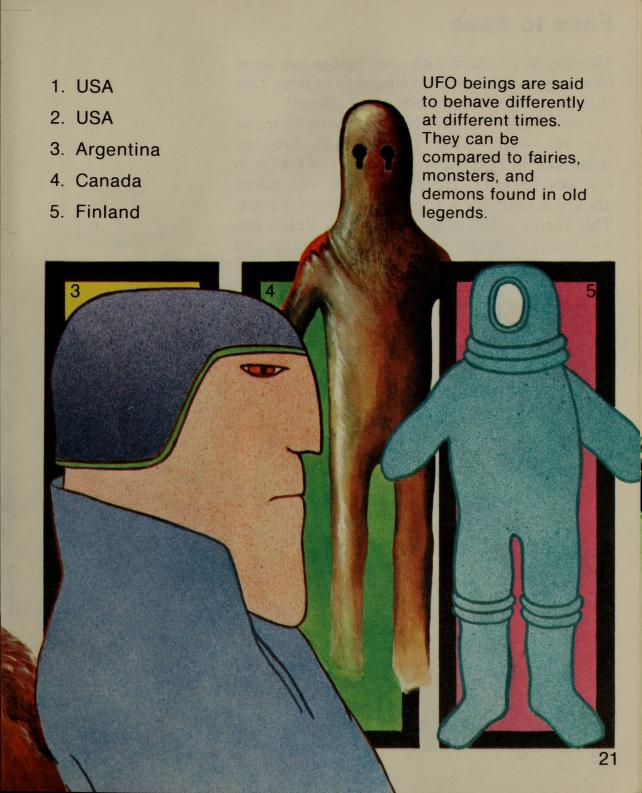
Probably the best-known UFO book for kids in the UK was Usborne’s 1977 World of the Unknown: UFO’s (sic), which appeared at the height of national UFOmania, but others continued to emerge. First released in 1978 by Archon, a publisher based in London’s Soho district, UFOs (republished in the US by Nutmeg Press) gains some added legitimacy from the fact that it was written by Brit Bob Rickard, who in 1973 founded what would eventually become the Fortean Times, a monthly magazine devoted to “anomalous phenomena,” and Rickard’s skepticism comes through despite the grab-the-pocket-money undertone inherent in any similar enterprise.
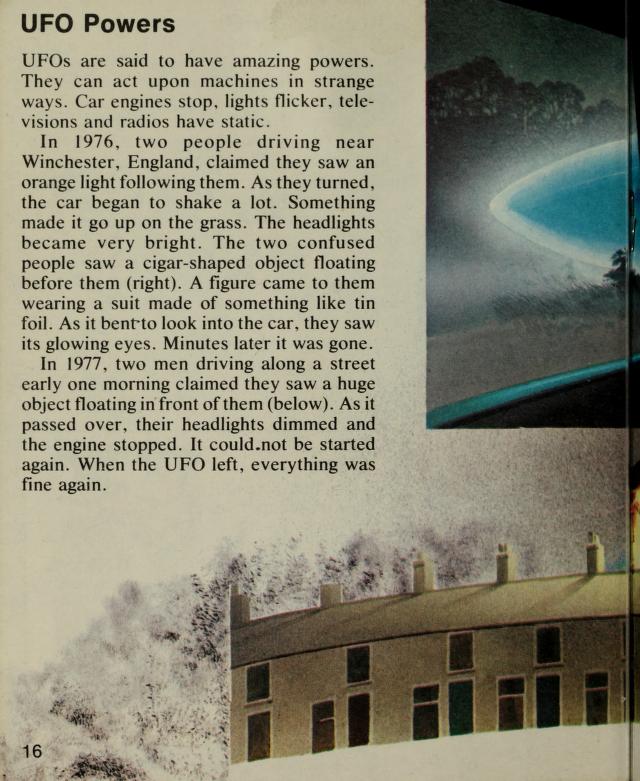
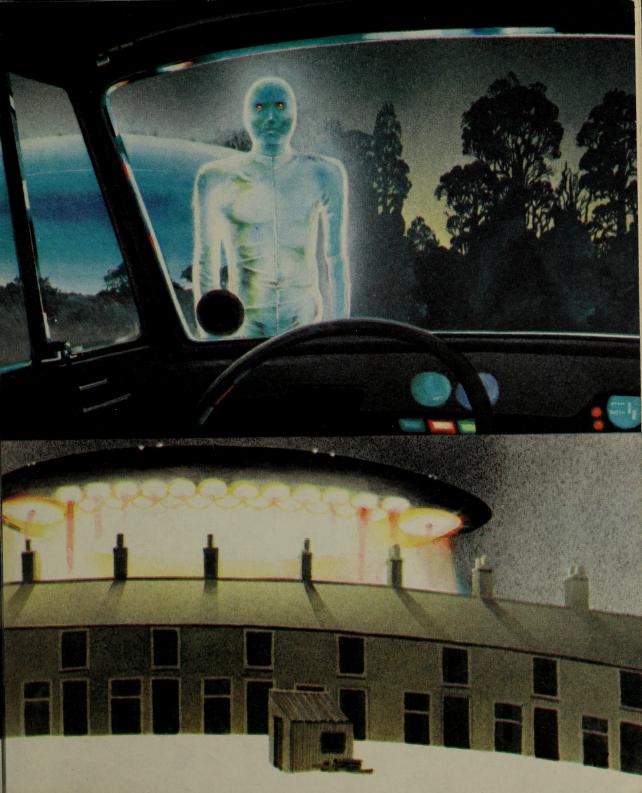
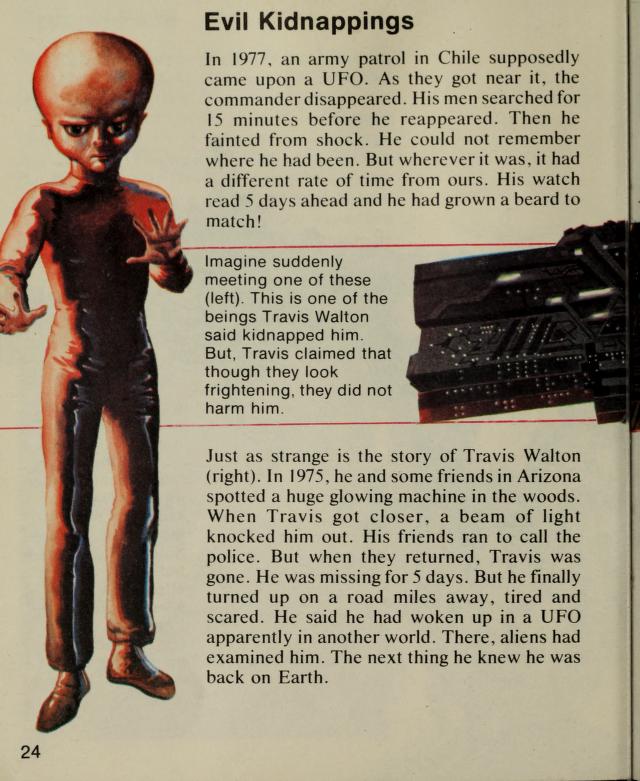
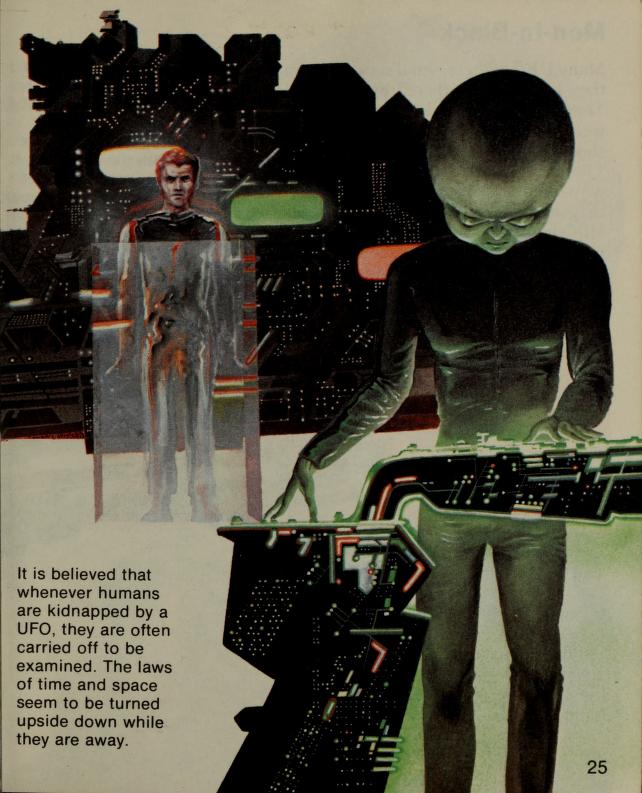
The wonderful, hallucinatory illustrations inside the book are by Lancashire artist Geoff Taylor. In an interview on his website, Geoff—perhaps better known for his work for Games Workshop and Warhammer, his paintings in the booklet accompanying Jeff Wayne’s The War of the Worlds, and dozens of paperback book covers—cites among his inspirations Casper David Freidrichs, Gustave Moreau, Karoly Ferenczy, Euan Uglow, Gustave Dore, and Andrew Wyeth, and there’s definitely something of those artists’ transcendent, glowing worlds in the work he does here to convey the magic and irrationality of the UFO phenomenon.
The visionary force of the artwork is tempered only slightly by subtle commentary from Bob Rickard’s prudent text, full of “people claim,” “some people think,” and “supposedly…” He is clearly attempting to encourage a dose of healthy skepticism in the developing brains of the book’s impressionable, Close Encounters-addled readership.
All interior illustrations © Geoff Taylor


