
Screen Time for Rent: Granada TV Commercial, 1977
This 1977 TV commercial for Granada TV Rental opens a window onto an almost forgotten aspect of the relationship the British viewing public once enjoyed with their television sets…
This 1977 TV commercial for Granada TV Rental opens a window onto an almost forgotten aspect of the relationship the British viewing public once enjoyed with their television sets…
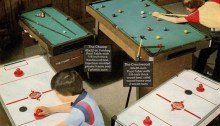
The Sears catalog was, by the outset of the 1980s, an American institution nearly a century in the making, providing an A-to-Z inventory of mail-order household goods for even the most far-flung consumers in the United States…

Incredibly, it took only four years for the spectacle to regurgitate the absurdist nightmare future that George Miller had assembled in 1982’s Mad Max 2 as that most inane and transitory of commodities: a children’s board game…

First released in 1978 by Archon, a publisher based in London’s Soho district, UFOs gains some added legitimacy from the fact that it was written by Brit Bob Rickard, who in 1973 founded what would eventually become the Fortean Times, a monthly magazine devoted to…
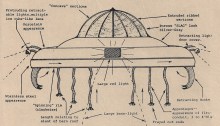
The suggestive commonalities of these disparate MUFON presenters does seem to buttress the now-common view that the entire world of postwar American ufology was a giant blind alley meant to distract from and obfuscate top secret U.S. military programs…

Unlike his younger compatriots Shusei Nagaoka, Hajime Sorayama, Eizin Suzuki, and Hiroshi Nagai, who broke into the American illustration market with glistening airbrushed futures and breezy, pastel-colored beach scenes, Tsunehisa Kimura’s output was absurd, darkly surreal, and often apocalyptic…

In 1977, with von Däniken mania still thriving, Alfred Górny of Polish publishing house Sport i Turystyka—Sport and Tourism—made an agreement with Econ Verlag, the publishers of the German edition of Chariots of the Gods?, to create a series of comics based around von Däniken’s crackpot concepts…
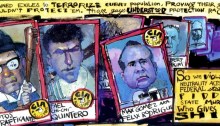
In 1989, at the very end of the Cold War, a group of four prominent mainstream and alternative comic book writers and artists created a double volume graphic novel exposing the rampant injustices, assassinations, and terrorism facilitated by the CIA and its creatures worldwide, ostensibly to fight global communism in the years following World War II…
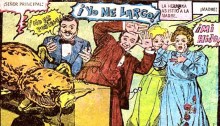
Most editions of Vidas Ilustres dealt purely with the biographical details of the person in question, but in the Obras Inmortales (“Immortal Works”) series the comic would dramatize not only their life but also a piece of their oeuvre. This was the case with “El Hombre Que Se Convirtirio En Un Insecto”—“The Man Who Became an Insect.”

When the hippies grew up and had kids of their own, they needed something modern and self-contained to bring everyone back (occasionally this time around) to nature. Hence, the Vanagon…

