By Michael Grasso / August 11, 2026
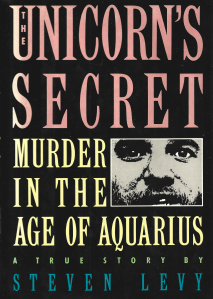 The Unicorn’s Secret: Murder in the Age of Aquarius
By Steven Levy
Prentice Hall, 1988
This review is based on the first edition of the book.
To interested observers in the 1970s, Ira Einhorn was the paragon of the bleeding-edge, Age of Aquarius thinker. He founded free classes on psychedelics, conducted one of the first “Be-ins” on the East Coast, penned trend-spotting newsletters for corporate clients, and organized huge public events dedicated to environmental causes and the exploration of esoteric thought. In so doing, he opened the forbidding doors of the mainstream corporate American elite to the youthful vibes of the American counterculture. But Ira Einhorn was also a mentally unstable narcissist, a chronic abuser of women, and an eventual murderer who tried to foist off responsibility for his killing of long-time girlfriend Holly Maddux onto a purported conspiracy involving the intelligence community, a secret army of psychics, and U.S. government research into remote mind control. Steven Levy’s 1988 investigation of Einhorn and Maddux, The Unicorn’s Secret: Murder in the Age of Aquarius, illuminates the countercultural currents that led to these two very different people meeting, tumultuously falling in and out of love, and the tragedy that followed.
Ira Einhorn was a son of the prosperous postwar Jewish middle class in Philadelphia. Levy paints a picture of a parentally-indulged elder son who showed a remarkable precocious intelligence at a young age, and a reluctance to behave at school. By high school Einhorn had already cultivated an iconoclastic personality, going out for the football team at the same time as expounding on the various advanced books he’d read, all while thumbing his nose at authority. For a family obsessed with “making it” by having a son ready for college, his acceptance at the Ivy League’s University of Pennsylvania was a dream. But Einhorn found himself at odds with the strictures of the curriculum, self-directing most of his learning while charming key professors who deemed him a genius. Levy makes clear in these early chapters that Einhorn had an almost preternatural ability to charm, rook, and con those individuals chafing at his anti-establishment flourishes. His close college friend Michael Hoffman said, “Ira would want to manipulate you so you would lead the life he wanted you to lead. He would tell people the books that they needed to read, the thinkers they needed to think about, the ideas they had to come in contact with.” His most-charmed professor, a literature scholar named Morse Peckham, seemed to enter into a folie à deux with the young Einhorn, even having Einhorn move in with him during graduate school. It was also during this time that Einhorn was trafficking huge amounts of marijuana to the student community of Philadelphia. Peckham, scared of a bust, changed his locks: “I was his guru,” Peckham said. “And then he decided to become a guru himself.”
Holly Maddux was born on the other side of the country. A thoughtful, quiet Texan girl with dreams of working in landscape architecture or as an artist (Levy notes with amusement that she was certainly a better and more conscientious student than “genius” Einhorn), she was considered a bit of a wallflower (in a striking parallel to Einhorn’s football career) before unexpectedly going out for the cheerleading squad, a position with enormous social cachet in early-’60s Tyler, Texas. A note from one of the seniors on the squad read, “You have acquired a tremendous responsibility as well as a title… To be always joyous and cheery is so important.” Life at home seemed marginally less cheery: a father, Fred Maddux, who seems to have both carried home trauma from World War II while having, as “a laugh,” a custom “FUHRER” license plate and exhibiting “a large, red Nazi flag that hung in the den.” The house was loaded with guns and mounted animal head trophies. Maddux and her four sisters and one brother were granted their social niceties by their more patrician mother Liz, who’d met Fred as a WAC in the latter days of the war in Germany. So it seems unsurprising that Holly decided to leave Texas for college at Bryn Mawr, which began a peripatetic series of years in which she traveled the globe and found personal, political, and sexual liberation in the counterculture—a liberation that would set her on a collision course with Einhorn.
Einhorn’s ascendency in the counterculture of Philadelphia turned him into “the Mayor of Powelton,” according to Levy: “Powelton was Philadelphia’s Bohemia—the place that housed its outcasts, fringe characters, mavericks, counterculturists, and lunatics, along with a number of people—possibly the majority in 1963—who were just plain poor.” In the mid-’60s, Einhorn traveled to California twice, picking up the currents of unrest at the Free Speech Movement in Berkeley and diving into the hot tubs and seminar rooms of Esalen, bringing news of both back to the City of Brotherly Love. The courses Einhorn taught at the Penn Free University were incredibly popular and he became the Philly media’s go-to man for commentary on the drug subculture, antiwar sentiment among the youth (born in 1940, Einhorn was just a shade older than most of the hippies), and what the future held for America when its Baby Boom generation took over.
At Esalen and elsewhere, he perfected his guru shtick. One California associate, a psychiatrist named Jim Sorrels, watched Einhorn in action:
[H]e would take a position seated directly in front of you in a lotus posture. And the eyes would just lock in, and it didn’t matter whether you were talking about Marshall McLuhan or your own life, but the contact, the engagement, was complete. You almost never made small talk with Ira. He came with the parentheses: This man is not made for small talk.
Einhorn also was an inveterate nudist by the late 1960s, shedding clothes routinely when visitors came to pay homage to “the Mayor of Powelton.” In 1967, he brought the Be-In to Philadelphia; in 1970, he was part of the group that promoted and presented the first Earth Day in the city (taking much more credit in the following years than was probably warranted: “I planned, directed, and emceed the entire event.”). A largely farcical run for Philadelphia mayor followed, against the ruthless, hippie-hating police commissioner Frank Rizzo, who would become a Philly icon himself in the 1970s.

Maddux and Einhorn at their Cape Breton retreat, summer of 1974. Photo from Unicorn’s Secret.
It was amidst this public ascendency that Einhorn met Holly Maddux. Both had spent the past few years in a series of relationships, often juggling multiple partners at a time, and that open status would not change for the majority of the few years they spent together. Einhorn sensed in her something more profound than his past partners. Considered by colleagues and friends to be a bit of a lech and sexist, Einhorn found himself initially tamed by Maddux. A friend notes, “In the beginning, you never heard Ira putting her down” (unlike Einhorn’s past partners, whom he would publicly berate and bully intellectually). But with this overwhelming emotional intensity came conflict nearly immediately. She acted as Einhorn’s assistant, his “better half,” and would move in and out of the Unicorn’s life while he was building himself a reputation among two groups that would play important roles in his eventual downfall: the American corporate elite and the spooky world of intelligence-linked “paranormal researchers.”
Much of the media attention bestowed upon Einhorn had to do with his canny ability to predict future trends. One of his Free U comrades from 1966, Kiyoshi Kurimaya, said, “Ira seemed to have a complete system. He had a unique analysis of world events and contemporary culture that was not available in any other source that I had come in contact with. And they were ideas that were later confirmed through study, sometimes a year later, and sometimes ten years later.” In the aftermath of Earth Day, one of the planning committee’s corporate sponsors had introduced Einhorn to a VP at Pennsylvania Bell, Moses Hallett. Einhorn’s position as the mayor of Powelton made him a natural fit for a community liaison consultancy to negotiate the planning of a new Penn Bell phone switching center being built in South Philly; soon, Hallett and his corporate cronies were using Einhorn’s expertise and counterculture connections in regular meetings at exclusive French restaurants and Philadelphia hotels. Ira lived high on the hog on corporate expense accounts, all while plotting and planning his own agenda: “I wanted to understand what it was about the structure of some of these personality types. Because they are the people who really run America.”
Eventually, Einhorn would tap Hallett to pay for the production and distribution of a newsletter/clippings service that circulated among corporate bigwigs and New Age futurologists (Alvin and Heidi Toffler of Future Shock fame were ardent fans: “The clips were wonderful!”) This “network” gained Einhorn new followers in important positions. Free Speech Movement figure Michael Rossman said: “He was dealing with a very important coin for that cultural historical time, which was edge information.” The “larger goal,” said Einhorn, was “eventual planetary transformation.” Einhorn, whom Levy notes was universally recognized as an abysmal writer, gave little commentary in these clippings and took no pay from Bell other than those production expenses. But his curation of fringe science, psychic phenomena, and future forecasting was catnip for the corporate class. The clear social reward can be seen in Levy’s paragraph-long list of economists, journalists, theorists, executives, and movers and shakers who became avowed Einhorn fans in the mid-’70s.
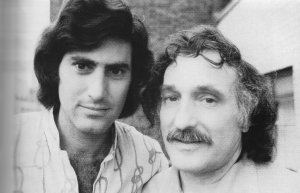
Uri Geller and Andrija Puharich, 1974. Photo from Unicorn’s Secret.
The “planetary transformation” Einhorn mentioned referred to the psychic research fad that was sweeping universities and private research institutes. Einhorn’s primary contact in this world was Andrija Puharich, an intelligence-linked promoter and “investigator” into the paranormal and psychic powers who had done work for the technical services division of the CIA in the ’50s. Einhorn himself called Puharich “the great psychic circus manager of this century,” a clear case of grifter recognizing grifter. Puharich promoted faith healers, UFO channelers, and “psychic surgeons,” and by the early 1970s had taken interest in promoting an intense young Israeli with purported powers of telepathy and telekinesis—none other than Uri Geller. Einhorn and Maddux, during one of their thaw periods, spent considerable time at Puharich’s Ossining, New York compound, nicknamed the “Turkey Farm,” where Puharich was “instructing” a cadre of children and teens involved in psychic experiments and training. Puharich dubbed his subjects “Space Kids” or “Gellerlings.” Einhorn would organize a 1977 conference at Penn called “Mind Over Matter” with Puharich attending, and Puharich would return the favor with a conference at Harvard’s Science Center in spring of 1977, “Towards a Physics of Consciousness.” Einhorn and Puharich shared an intense interest in Nikola Tesla’s experiments with extra low frequency transmissions, which Puharich linked to mind control. If the Russians had control of the Tesla archive thanks to Yugoslavian authorities, as Puharich and Einhorn believed, who knows what the Reds could get up to?
It was at the end of summer 1977 that Ira and Holly’s long, chaotic love affair finally seemed to peter out for good. Maddux left him during a tour of Europe and flew back to the States. She took up with Puharich supporter Joyce Petschek (two of her own children were “Gellerlings”) at her Fire Island home. Friends and family seemed relieved that Maddux had finally cut Ira out of her life. And then, in September, 30-year-old Holly Maddux vanished without a trace. Her family involved the FBI and eventually a team of private investigators, who spent nearly a year investigating her disappearance. Einhorn played it cool but concerned, admitting that he had seen Maddux in September but that she “went to the store and didn’t come back.” But investigators notched several suspicious details about the disappearance, most of which revolved around “a strange smell” in Einhorn’s apartment building. It took until late March 1979 for the Maddux family’s team to enlist the Philadelphia police to serve Einhorn with a search warrant: Holly Maddux’s mummified body was found in a trunk in a locked closet in his apartment. Einhorn expressed shock and surprise that for 18 months the dead body of his missing girlfriend had been right under his nose. Preternaturally calm during the proceedings, Einhorn simply said, “You found what you found.”
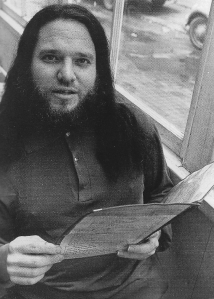
Einhorn at Philadelphia restaurant La Terrasse. Photo from Unicorn’s Secret
And with the arrest and charge of Einhorn with Holly’s murder came the most bizarre phase of the Unicorn’s already very strange life: the endless array of character witnesses who, over the course of the rest of 1979, expressed doubt and shock that gentle pacifist giant Ira Einhorn could ever commit a murder so grotesque and cruel. (Later investigation by Levy made it clear, thanks to testimony from Einhorn’s other exes, that Einhorn had sadistically abused and nearly killed at least two of them.) Eminent Philadelphians from all walks of life, but especially from the corporate world, queued up to offer testimonials to the man who wrote their favorite weird-news clipping service. Future Senator (and Warren Commission official) Arlen Specter, then a criminal lawyer, was tapped to give Einhorn (expensive) legal representation. Levy notes that at Einhorn’s bail hearing the list of character witnesses was so long that “There simply was not enough time for all their praises.” Barbara Bronfman, wife of Montreal liquor and beverage mogul Charles Bronfman, put up the $4,000 cash bond of Einhorn’s paltry $40,000 bail for first-degree murder.
Einhorn now had the “good” fortune to have gotten involved with Puharich and his CIA-dipped paranormal promotions, to the extent that Einhorn created reasonable doubt about the possibility of the CIA “framing” him for Maddux’s murder because of the affair around the mysterious Tesla archive in Belgrade. A “psychic Pearl Harbor” could result because of these documents; “That’s the only thing I can speculate,” Einhorn told Philadelphia Magazine reporter Greg Walker, “that from our point of view we’re dealing with a weapons system that we have no defenses against. That would be the last thing that the CIA or anyone in the military establishment would even want us to breathe about.” Among the milieu Einhorn had long cultivated, even on the corporate side, this was believable. The country was sleepwalking out of its long national nightmare of government criminality: Watergate, Vietnam, the CIA assassinating foreign communist leaders and doing domestic ops on Black nationalists and anti-war movements. The story never quite cohered, though; Einhorn’s supporters also supported the system that made them rich and powerful, and Einhorn’s tales of international espionage and conspiracy didn’t connect viscerally with the men on the board of Bell Telephone.
During 1980, as his supporters grew thinner on the ground, Einhorn made very obvious plans to flee, even traveling to London while on bail to scope out apartments. According to Levy, Einhorn’s opinionated publisher, Harry J. Katz, never one to mince words, had some choice thoughts for his accused-murderer client by the end of that year:
“Look at you—you’re an old hippie Jew wearing a dashiki with sandals, with body odor. You’re fat, you’re a weirdo, you make Charlie Manson look like a faggot, and you’re going to go in front of a jury of your peers? They’ll say that dirty, smelly, fat, aged, hippie Jew killed a little, blond, shiksa cheerleader from Texas! Ira, trust me, the law’s for lawyers. They are going to fry you!”
Einhorn fled to the UK and eventually to Ireland with a new female follower, Jeanne Marie Morrison (her background was a near-carbon copy of Maddux’s, complete with a conservative father who would soon be working for the Reagan administration as a speechwriter), and it’s here that the 1988-published tale by Levy more or less ends. Einhorn was eventually captured in France nearly ten years later, and only extradited to the U.S. after much wrangling in 2001. He died in prison in 2020.
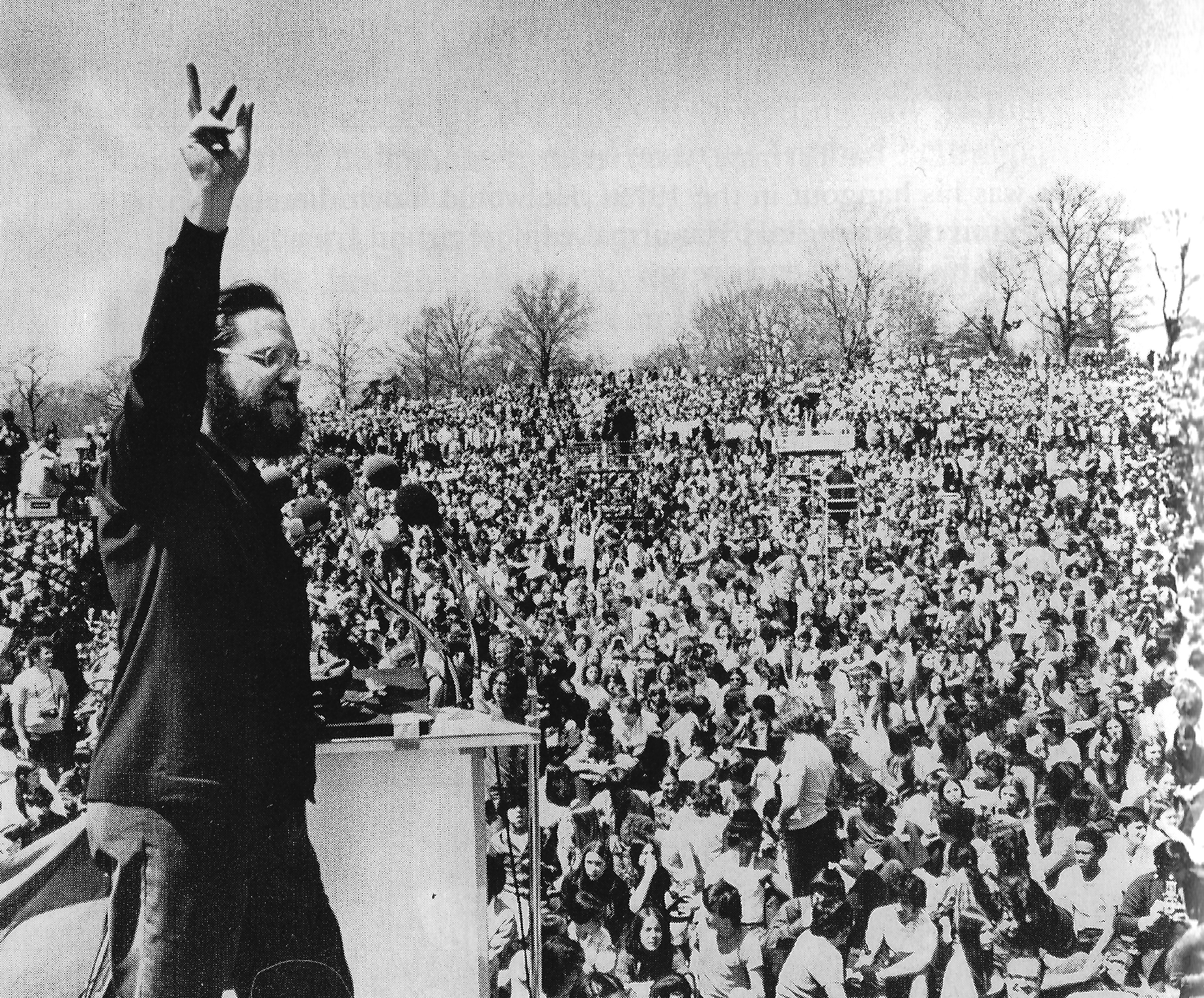
Einhorn in front of the Earth Day crowd in Philadelphia, April 1970.
The parallels of Ira Einhorn with our current crop of wanna-be gurus and influencers are obvious. Cults and toxic narcissists over the past decade have been funded and supported by wealthy, powerful people, some of whom bear the very same family name as Einhorn’s biggest supporters. Einhorn cultivated these scholars and magnates, offering them not only a taste of forbidden oracular knowledge, but the surety that their privilege would serve the world constructively and help shape the future. The intersection of charismatic, abusive svengalis with the intelligence community is also very much worthy of interest today. Einhorn surely was a living prototype for and harbinger of the America of the future. In his concluding chapter, Levy connects Einhorn to the moral bankruptcy of the ‘60s generation and the blind trust people placed in sociopathic gurus, cult leaders, and false prophets:
Ira Einhorn’s psychological karma is his own; one cannot blame that on a generational movement that meant well but could not deal with evil within its circles. But it is also true that the sixties gave Ira Einhorn his focus, his prominence, his rap, his confidence, and his slack. Slack that he used to the detriment of others. In times that boasted themselves as a historical turning point in history, times larger than life, it was easier to convince oneself that you were larger than life… The Unicorn was competent as an intellectual, a leader, a far-watcher, a networker, or an oracle, but he could not allow himself to become a human being.
Bloated on a diet of his followers’ dimwitted adoration and his own self-importance, Ira Einhorn was eventually punctured and exposed as a fraud. Using the social upheaval of a nation in turmoil and youth in revolt as his cover, he carved out a tiny kingdom for himself, and when confronted with his crimes, his wealthy benefactors largely let him twist in the wind. It’s a narrative we’re all familiar with now, but for a while, the Unicorn was one of a kind.
 Michael Grasso is a Senior Editor at We Are the Mutants. He is a writer, museum professional, and a lifelong Bostonian. You can follow him on Bluesky at https://bsky.app/profile/mutantsmichael.bsky.social.


