Misbehaved Monsters: Jay Anson’s ‘The Amityville Horror’

There are two Amityville horrors: the first happened in the pre-dawn hours of November 13, 1974, when 23-year-old Ronald Defeo Jr. shot and killed his father, mother, two brothers, and two sisters while they slept. He confessed to the murders the following day, and during the trial told the court that “voices” told him to do it. The second happened when a young couple, George and Kathleen Lutz, moved into the former Defeo residence…

Selling the Idyll: Christmas Greeting Cards, 1950 – 1980

Christmas cards became ubiquitous in the post-war era, when millions of Americans retreated to a more secluded existence in the rapidly developing suburbs. As small towns—idealized by Frank Capra and Norman Rockwell, among others—started to be displaced by tract housing complexes and chain stores, embellished scenes of the vanishing idyllic communities became a standard trope on greeting cards…

The Music the Machines Make: ‘Systems of Romance’ by Ultravox

By K.E. Roberts

London’s Ultravox was John Foxx’s band for three increasingly brilliant albums. Their debut, 1977’s Ultravox!, is an uneven but essential distillation of Roxy Music, art-rock-era Brian Eno (who produced, along with Steve Lillywhite), prog, minimalist electronica, and dub. The same year’s Ha!-Ha!-Ha!, on the other hand—a mere eight months separated the albums—is a focused and unsparing gnashing of teeth…

Commies, Devils, and Mind Control: How the Christian Right Invented Satanic Backmasking

By K.E. Roberts

Rock and roll was maligned as an “unholy pleasure” almost from the get-go, just as dancing was decried as the “Heritage of Hell” centuries before. After John Lennon declared the Beatles “more popular than Jesus” in 1966, Christian fundamentalists immediately condemned all music that “aroused the lower instincts,” and the smear campaign would last for more than a quarter-century…

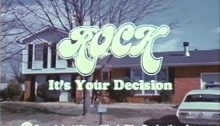
Beware the Beat: ‘Rock: It’s Your Decision’, 1982

When John Lennon told British journalist Maureen Cleave in March of 1966 that the Beatles were “more popular than Jesus now,” and that “Christianity… will vanish and shrink,” there was no controversy apart from a handful of letters sent in to the paper that ran the story, the London Evening Standard