By Michael Grasso / July 1, 2026
“Even apart from my intellectual convictions, there was this whole matter of California. As a transplanted Easterner, I felt duty-bound not to take anything in California very seriously. I certainly felt no need to understand California; I simply allowed myself to record the usual impressions: millions of Americans breaking away from reality, looking for a dream; everything in excess… When natives told me this was where it was “happening,” when they said California was the future, I was quite ready to believe them simply because I had no real hopes for the future anyway. To me, California was a place desperately lacking in the experience of limitation, a dream factory in every sense of the word. No wonder all these cults and sects were flourishing here.”
—Jacob Needleman, The New Religions, 1970
“They talk about cults and they say that cults are dangerous, but all you ever actually see in the news is governments killing cults! You don’t see cults killing anybody! And I don’t think when you come out and live in a religious community in a beautiful place out in the country, and you’re away from crime, that you suddenly are overcome with this suicidal impulse!”
—Amo Bishop Roden, 1996“everything is cults”
—Michael Grasso, 2024
Fans of fraternal Scottish music duo Boards of Canada could be forgiven for being a little overexcited when news of the feverishly anticipated fifth LP, Inferno, the group’s first new music in 13 years, arrived through a series of postal packages stuffed with VHS tapes in spring of 2026. On those tapes was a layered palimpsest of media hinting at cultic awakenings, scrambled transmissions from televangelists, and promotional patter for revelatory “flexi-hexi-discs.” Then, the promotional video titled “Tape 05” dropped, offering a new song, presumably from the new album: moodily dramatic chords and introspective harps over yet more spiritual imagery: nature documentary footage leading into the alternately ecstatic and militarized video recordings of the infamous Rajneeshpuram commune made famous by 2018 Netflix documentary Wild, Wild Country. One promotional blurb during this cycle intriguingly called out a sonic approach “further intensified through the increased use of voice recordings.”
Lead double single and video “Introit/Prophecy at 1420 MHz” arrived on May 7 and confirmed all of these hints and tantalizing previews: the two songs were, respectively, a synthy popular modernist throat-clearing inspired by ’70s/’80s television idents followed by a surprisingly hard-rocking quasi-industrial tune full of foreboding, electronically-processed vocals. Snippets of public television and national film board projects, stray commercial television broadcasts, recitations redolent of the somnolent cryptic flow of numbers stations—all these signposts of the hidden world underneath the Cold War period in the West have been signature motifs throughout Boards of Canada’s more than 30 years of existence, but with the release of Inferno, the foremost of these sub-liminal obsessions has become, undoubtedly, cults. The album’s thematic cohesion hangs together specifically from those “increased vocal recordings,” which are gleaned from a number of spiritual and scientific sources. Not every song on the album has them, but they dominate the proceedings.
The musical stylistic choices on Inferno also speak to the rise of alternate belief systems, specifically in the 1990s. I probably wasn’t the only longtime fan who was somewhat shocked by the overall “sound” of Inferno. Gone are the bubbles of bucolic innocence, the Sesame Street samples of Music Has the Right to Children (1998), the gently-strummed guitars of The Campfire Headphase (2005). Inferno is dark, clearly inspired by sample-heavy grooves in ‘90s goth, industrial, tribal dance, and other sub-genres of dark electronica, dance subcultures that had their own dalliances with alternate consciousness. It sounds like the kind of music being played in cyberpunk clubs while Boards of Canada themselves were pioneering what was rather dully called by contemporary critics “intelligent dance music.” Inferno is by far the duo’s most danceable album, but you’d be forgiven for picturing the dancing being done by sullen teens dressed in black circa 1995.
Listening to the album as a whole, Inferno is nothing less than an indictment of the world we live in now. It is a world in decay wrought by rampant, fervent, irrational belief. This is a world falling apart in slow-motion apocalypse, as hinted at in the implied societal collapse of that last album 13 years ago, Tomorrow’s Harvest, but this time riven with cultic pulses that have wormed their way into the entire globe and discredited all the old bromides of a stable planetary society: the nuclear family, civic society, international relations, mass media, and even the capability of individual humans and people in large groups to achieve true spiritual peace.
In the early career one-two punch of 2000’s In a Beautiful Place Out in the Country EP and their second full-length LP, Geogaddi (2002), the Sandison brothers delved deep into the Branch Davidian cult and its leader, David Koresh, sampling a 1990s syndicated TV post-mortem of the group on the series Mysteries, Magic, and Miracles in both the title track on the EP and “1969” off Geogaddi. Inferno offers nothing less than the dialectical fusion of these familiar themes: the apocalypse we find ourselves sifting through in 2026, and the legacy of the poison of dogmatic, cult-like belief. The specific track-by-track choices of samples used by Sandison and Eoin are fascinating in the breadth of belief systems they present and subvert, and in how they contextualize today’s environment of mass-engineered belief.
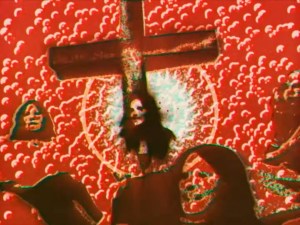
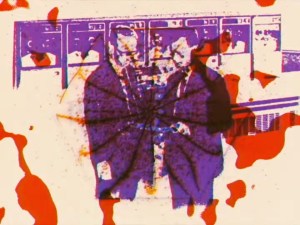
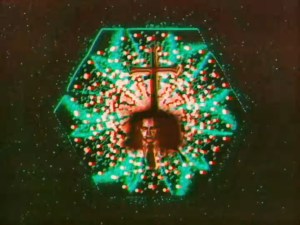
Let’s return to the lead single “Prophecy at 1420 MHz.” 1420 megahertz is the so-called “hydrogen line,” a frequency where energy is emitted when the spin of hydrogen atoms scattered throughout interstellar space “flips.” It’s long been used in radio astronomy because this energy pierces the shrouding effects of cosmic dust; it’s been used not only to observe distant galaxies through radio telescopes, but as a proposed marker where other civilizations might try to radio us information. The Pioneer and Voyager probes contain instructions to aliens for how to listen at 1420 MHz, and the famous “Wow” signal of 1977 was heard by Earthlings tuning in at 1420 megahertz. About halfway through the track, a deep, highly-processed voice pierces the groovy drums and synth melodies, intoning ominous universal statements: “Nothingness/Comes to a greater awareness of itself,” “I am the truth,” “I am God/The ultimate resonance.” The implication is that these words perhaps are coming from the sky as we listen in vain to this frequency for some kind of cosmic over-truth. The vocals end with the grim assessment: “Nothingness/The absolute truth.” These words are taken from a lecture and question and answer session at Harvard University by divinity professor Seyyed Hossein Nasr on the topic “In the Beginning Was Consciousness.” Nasr’s scholarship focuses on the ecumenical tradition of “perennialism,” which asserts that every religious, spiritual, and philosophical tradition has some perspective on metaphysical truth, and that there is some facet, some reflection of the numinous in all humanity’s common spiritual traditions.
Nasr’s lecture is a celebration of this messy spiritual seeking and the emptiness at the heart of Western scientific positivism. Boards of Canada tellingly samples the statement, “The scientific view of nature… is, in a sense, the religion of the modern world.” This makes the Sandison brothers’ détournement of Nasr’s (and a particularly fervent Q&A participant’s) words in the lecture recording all the more ironic and devastating: the vastness and immensity of the numinous and its inherent unapproachability quickly becomes, in these chopped and screwed phrases from Nasr and the lecture attendee, a message of nihilism, cosmic blindness: a missive from the stars that only promises us a blind, idiot, gnostic demiurge boasting of its power as “the ultimate resonance.” It’s a startling mutation of spiritual hope and optimism into curdling cosmic despair and fear, on par with a Lovecraft or a Ligotti, and it’s just the start of the album’s descent into our metamodern Inferno.
“Age of Capricorn,” the fourth track on Inferno, probably has the thickest and most impenetrable layers of vocal samples on the entire album; they’re also the most telling. Again, dark synth tones and beats lead into a quizzical voice reading off seemingly random letters: “U S A M A… M double A U S… U, uh… M A B U S. Mabus. Mabus!” This sample comes from a 2004 episode of Art Bell’s Coast to Coast AM radio show with guest John Hogue, a Nostradamus “expert” who refers to an antichrist named “Mabus” in Nostradamus’s quatrains, relating them to then-present-day boogeymen Osama Bin Laden and Abu Musab al-Zarqawi. As Hogue’s voice stumblingly spells out the anagrams of doom, a melodic chant fades in: it’s a devotional chant called “Door to My Heart” from the followers of one of the first yogis to come to America and form a religious group, Paramahansa Yogananda, whose presence in Southern California in the 1920s really kicked off the popular Eastern religious movement in the U.S.—forty years before the counterculture. “Just for once, come to me/I look for Thee night and day,” the chant continues, as yet another sample cuts in: the apocalyptic televangelist Jack van Impe from his 1990 video A.D. 2000: The End?, telling the viewer as he prays to Jesus Christ: “I’m a sinner… I receive You and Your shed blood for the remission of my sins. Come into my heart… save me now. Help me to be ready for Your return.” Three threads of Western esoteric tradition—the occult-conspiratorial prophecies of Nostradamus, devotional yogic Hinduism as filtered through Western eyes, and chiliastic Protestantism in the form of dispensational premillennialism—all fuse behind a repeated whispering of the word “Capricorn” into a harbinger of the titular “Age of Capricorn,” the 2000-year astrological age due to follow after our current counterculture-promised Age of Aquarius in approximately 4000 CE. One imagines the Boards of Canada boys chuckling to themselves that people (if we’re still around!) will be twisting themselves up into apocalyptic fits a couple millennia from now, still waiting for the End Times.
“Father and Son” is a fairly straightforward chopping up of a truly fascinating filmed document. A janky beat and eerie chiming synths lead to altered vocal samples of two men taken from a British documentary series called Man Alive. In this 1971 episode called “The Jesus Trip,” the BBC reporters tackle “the Jesus Movement” bubbling up in California at the time. The so-called “Jesus Freaks” were combining the rebellion of the counterculture with an evangelical fervor inspired by Jesus’s early ministry and the acts of the apostles after his death and resurrection. It turns out that this Christian fervor was actually tearing families apart just as much as “generation gap” issues such as the Vietnam War, American political corruption, and changing sexual and racial mores. At a “soul clinic” in Los Angeles, a father tries desperately to reach his son through Christianity, only to find his son has taken the word of Christ quite literally:
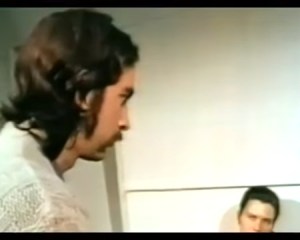
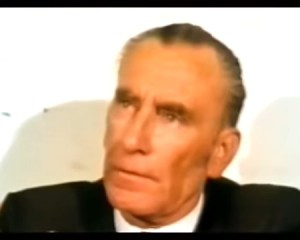
Son: “A man’s foes will be they of his own household.”
Father: “Well, I hardly believe that your own father or mother or brother or sister would be your enemy!”Son: “I love you, but I love the Lord more than I love any physical being.”
Father: “I think that’s wonderful! But then why can’t you bring that same feeling home?”
The “soul clinics” in California and Texas were owned by a Texas preacher named Fred Jordan and used (until they were kicked out by Jordan) by a cult called the Children of God (later known as the Family International), whose more than half-century of existence has been marked by inhuman acts of sexual abuse committed against the children of members, often by their own parents. The kind of epistemic closure and alienation from extended family seen in the Man Alive clip and heard in “Father and Son” was all too common in cult deprogramming narratives from the 1970s onward. This seems to be a direct call-out to to life and society in the 2020s, where today’s Baby Boomers and X-ers are mired in their cults of MAGA and Q and alienated from their own children and grandchildren in service to a pedophilic system, all while asserting their own holier-ness-than-thou status as crusaders of light who are trying to save children. Indeed, we are now all living in a country run by pedophile cultists who use God’s word to justify their patriarchal abuse, and the warning signs of this future were all there back in 1971.
“Naraka,” Inferno‘s ominous minor-chord-and-handclap-laden seventh track, is named after the underworld in several religious systems originating on the Indian subcontinent. In its lengthy coda, it taps straight into one of the most famous new religious movements of the Cold War era in the West: the International Society for Krishna Consciousness, more commonly known as the Hare Krishnas. The Krishnas were of course a pop culture punchline throughout the ’70s and beyond, often seen proselytizing and singing in public places like bus stations and airports. Boards of Canada directly uses the great Mahā-mantra, “Hare Kr̥ṣṇa Hare Kr̥ṣṇa, Kr̥ṣṇa Kr̥ṣṇa Hare Hare, Hare Rāma Hare Rāma, Rāma Rāma Hare Hare,” in the song’s latter half. Retaining the exact melodies of the Hare Krishna chant (much like the “Door to My Heart” devotional in “Age of Capricorn”) directly exposes the Boards of Canada listener to the hypnotic, transportative qualities of chant and group song.
With Inferno, the cult medium is absolutely also the message. The Krishnas were accused of turning children against their parents, and accusations of brainwashing from parents and deprogrammers led to court cases that protected the rights of children to dissociate from their parents and join new religious movements under the First Amendment right to freedom of religion. Boards of Canada naming this track, featuring a mantra that is holy to millions, after Hinduism’s place of ultimate torment is another clear sign of which side of belief Inferno comes down on. And yet the inherent beauty of the mantra itself cannot be overlooked or denied; it is insanely catchy and made me wonder if “Naraka” could itself proselytize for Krishna Consciousness. The omnipresent tension and dialectic throughout Inferno hinting that the power of belief is both beautiful and terrible might be strongest on this track.
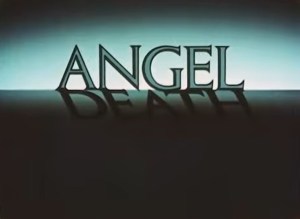
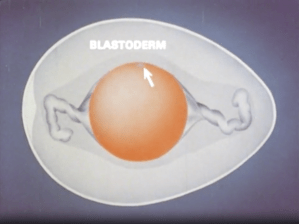
Even when Inferno leaves the beaten path of cults, it finds other ways to unnerve and disquiet. A different kind of slavish devotion turns up in the vocal samples on track 12, “Blood in the Labyrinth.” With its heartbeat-like drums and sitar-based hook, it feels like a tribal house jam from the 1990s, but the samples come from a 1979 documentary on the PCP epidemic called Angel Death. Addicts recount their lowest points on the drug, a young man saying: “Quite often, I found myself being, uh, pretty violent. Just the least thing would really set me off”; and a young woman watching her friend drown in a pool: “I got out of the swimming pool and I watched her… When I finally did dive in and get her, she was already dead. And after that, I just ran off screaming.” The title of “The Word Becomes Flesh” might seem to invoke Joannine Christian mysticism about Jesus being the Word of God incarnate, but instead it chops and screws the weirdly cheery narration from a 1983 biology filmstrip about the in ovo development of a chicken embryo. I have to imagine that this was done to purposefully evoke pro-life Christianity’s worship of the unborn embryo in a severely satirical and ironic fashion. (The song’s use in the closing credits to 2026’s horror hit Backrooms, with its never-born liminal interiors and mutated inhabitants, seems to back up this interpretation.)
When the track listing for Inferno was released, many of us were intrigued by the name of track 16, “The Process,” thinking it might involve the infamous Process Church of the Final Judgement somehow. But it’s actually “All Reason Departs,” track 14, that bestows the album with its necessary quotient of literal black magick. There’s no mistaking the verbiage that booms forth in the first minute of this meditative, percussive six-minute track, sounding like it’s being tuned in from a distant transmitter, shortwave static scrambling in the background:
There is a Magical operation of maximum importance: the Initiation of a New Aeon… Before man is ready to accept the Law of Thelema, the Great War must be fought. This Bloody Sacrifice is the critical point of the World-Ceremony of the… Crowned and conquering Child, as Lord of the Aeon.
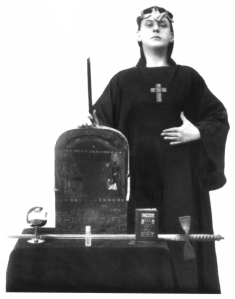
Aleister Crowley, circa 1912
Aleister Crowley’s Thelema movement, the origin point of so much of 20th century popular esotericism, followed and adhered to by a myriad range of people from filmmakers to rocket scientists to pulp authors-turned-cult leaders to rock stars, began with Crowley’s “divinely-dictated” Liber AL vel Legis (The Book of the Law) in 1904. Crowley proclaimed a new Aeon in which, famously, “Do what thou wilt shall be the whole of the Law.” Further volumes elaborated on the actions necessary to truly usher in this new Aeon, including 1912’s Magic, Liber ABA (Book 4), whose Part III, “Magick In Theory and Practice,” includes the above passage. The very same “bloody sacrifice” and “Great War” were believed (in retrospect, of course) by Crowley and his followers to have called forth the bloody slaughter of the actual Great War (later called World War I) just a couple of years later. Crowley’s prophecies would often center around the birth of an antichrist-like child figure who would deliver the planet back to Horus to usher in the new age. Crowley himself was a suspected agent of British intelligence and a proto-fascist whose motto has inspired some of the worst people in the world. His followers and successors would attempt to summon their own harbingers of apocalypse over the next century; “all reason departs,” indeed.
Tomorrow’s Harvest and Inferno certainly don’t dissuade me from my now-decade-old speculation that much of Boards of Canada’s 30-plus years of output is a grappling with the greed and capitalism-induced collapse that was birthed, Crowley-and-Horus-like, from that last gasp of popular modernism in the Cold War era. Those of us born in the 1970s have our own peculiar crosses to bear: crosses of implied complicity, moral and political lassitude, allowing the media of our youth to render us placid and docile for this mad, destructive system, and the systems of belief and control that seem to keep us in hamster wheels of supposed mystical transportation and individualistic, narcissistic satisfaction. We’re all sweating in that Inferno now, as climate change bakes the planet and cult leaders in power all over the globe instruct us to hate the other, to fear the alien, to come back to the Lord and reject our human family. In Dante’s Inferno, Dante the pilgrim and Virgil find themselves on the lowest levels of Hell dealing with the sin of betrayal: betrayal of family, of country, and, at the center of the Underworld, in the deepest part of Hell, betrayal of God. Satan, the greatest traitor of all, eternally chews at Brutus, Cassius, and Judas Iscariot, human history’s greatest traitors. What is a cult leader, after all, but a betrayer of trust? And what is the mass control movement of a cult of personality but a betrayal of our collective societal compact with each other?
The penultimate track off Inferno, “You Retreat In Time And Space,” received a lot of plaudits from the fans as a return to the innocence and bucolia of Music Has the Right to Children and The Campfire Headphase. It certainly does do that, dreamily evoking some of the melodic themes of softer, more nostalgic and hauntological Boards of Canada classics like “Roygbiv” and “Peacock Tail.” It feels out of place on Inferno, for sure. About two-thirds of the way through the track, these sudden unexpected booming chords, like the glass-shattering blasts of tuba from the mothership in Close Encounters of the Third Kind, try to batter their way into the song, but quickly retreat, the pure positivity and possibility of the hauntological sweetness of the track keeping the doom on the rest of Inferno at bay… for a little while, anyway. The album’s finale, “I Saw Through Platonia,” follows that softer groove into the Inferno’s end, with an insistent heartbeat sampled throughout. But as the sounds slowly turn sinister and the album grinds to a halt, our collective heartbeat catches and fails as an electronic squelch, very much like that heard on “All Reason Departs,” rises on the track, yet another dark transmission interrupting and disrupting our collective idyll. The stray transmissions assaulting our ears and souls from the masters of cults remains a threat unto death, even in the idealistic realm of a giant eternal universal Now. Everything is cults, and cults are in everything.
Many thanks and all recognition to the dogged efforts of the Boards of Canada fan community for identifying many of these samples and to the bocpages wiki and Discord for collecting them.
 Michael Grasso is a Senior Editor at We Are the Mutants. He is a writer, museum professional, and a lifelong Bostonian. You can follow him on Bluesky at https://bsky.app/profile/mutantsmichael.bsky.social.


This was a joy to read, already shared. The car crash audio in SRNITF is interesting- maybe a reckoning moment in the life of the father or the son? Memory Death also seems to reinforce the completion of this cycle of rebirth/hypnosis? (again, Acts of Magic requiring further analysis)
I do think it would be interesting to consider the track Arena Americanada – I haven’t quite figured it out myself. Deep Time is particularly interesting given the official release on the Tape 05 video.
I do disagree that YRITAS is out of place in the album – in some ways I feel like it’s a nod to the fans that this is what they could have gotten in 18-track format… but instead a different form of artistic expression felt more apt to the times.
Pingback: We Are the Mutants Turns 10