By Michael Grasso / September 28, 2026
Object Name: Sears 1981 Wish Book: Toys and Games
Maker and Year: Sears, Roebuck & Co., 1981
Object Type: Catalog pages
Image Source: Catalogs & Wishbooks (https://christmas.musetechnical.com/)
Description: (Michael Grasso)
The Sears catalog was, by the outset of the 1980s, an American institution nearly a century in the making, providing an A-to-Z inventory of mail-order household goods for even the most far-flung consumers in the United States. In 1980, Sears was doing revenues of $25 billion and its retail dominance seemed unassailable. The company introduced its Christmas “Wish Book” in 1933 in the middle of the Great Depression, a catalog wholly devoted to gift-giving ideas, primarily for children. The 1981 edition featured over 650 pages of merchandise from clothes to home decor to appliances and electronics. But the real draw for every kid at the time was the back quarter of the tome, which contained toys of all types for all ages.
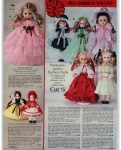
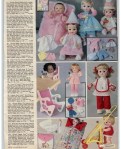
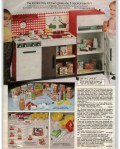
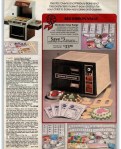
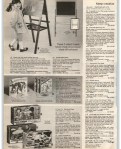
A relative level of gender parity among the toys may have been present, but so too were implied gender roles. Baby dolls take up a full 12 pages in the 1981 edition, with the two pages presented here of crying and wetting dolls fairly indicative of the fusty, old-fashioned styles still being offered. Training the girls of America for motherhood didn’t end in the nursery; play kitchens (including a cutting-edge microwave-like “Electronic Sonar Range”) occupy a half-dozen pages in the catalog, including a very-of-its-time full goldenrod kitchen. At the very least, in the pages pictured, a boy is joining his girl partner working in the kitchen.
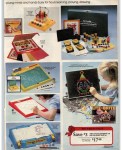
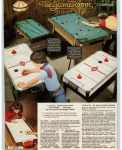
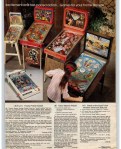
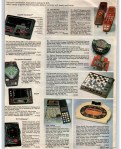
The section on “art” is also intriguing; along with easels, crayon sets, and Play-Doh sets is the 1967 suburban American rec room stalwart Lite-Brite, which would set you back a cool $62 in present-day dollars. And speaking of rec rooms, miniature kitchens were not the only kid-sized adult playgrounds that Sears offered. If you fancied a game of billiards, pinball, or air hockey, Sears had you covered with pint-sized versions of the teen and young adult favorites. “The Disco scene’s alive with action!” Sears lets us know, and only $124 ($440 today) will get you a “partially-assembled” disco-themed table with a back box illustrated with dance floor scenes straight out of Saturday Night Fever.
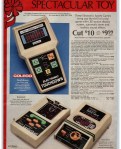
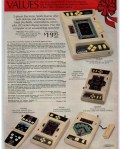
Electronic games were, of course, huge in 1981, with Sears selling plenty of handhelds to go along with its Tele-Games line and its prominent licensing deal with Atari. Many of these handhelds strode the line between true electronic games and mechanical ones: Blip from 1977 had a knob you would wind up to get its “electro-mechanical” Pong ball rolling. But there were also the newest generation of true electronic sports handhelds, including Coleco’s Electronic Touchdown (also known as Electronic Quarterback), which was sampled in, of all places, Supertramp’s 1980 single “The Logical Song,” and Sears’ own two-player “consoles” featuring all five major American sports. Also of note is Parker Brothers’ phone handset-shaped Merlin, which allowed you to play a half-dozen electronic games, including Tic-Tac-Toe, Mastermind, and blackjack; heaven help you if you lost the instruction booklet that allowed you to interpret what the console’s eleven LEDs meant.
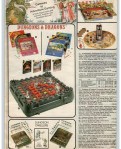
Also of interest is TSR, Inc.’s attempt to spread the word about its Dungeons & Dragons line of games. 1981 might have been the peak of the Lake Geneva, Wisconsin company’s existence, with stated revenues over $10 million and D&D fast becoming a household word. Not only could you order the D&D Basic and Expert Sets and Advanced Dungeons & Dragons rulebooks through Sears, but there were entry-level games for inexperienced dungeon crawlers, including an electronic/board game hybrid called D&D Computer Labyrinth Game and board game Dungeon!, dating from 1975, one of the first D&D tie-ins.
Midwestern origins and industry dominance weren’t the only similarities between Sears and TSR. Overextension of its brand, market oversaturation, and internal disputes and mismanagement would lead to TSR’s decline in the late 1980s; TSR was bought out by Wizards of the Coast in 1997, and Sears too would fall to Kmart Holdings Corporation in 2004, its brands and stores eventually being sold off piecemeal over the next 15 years by private equity raider Eddie Lampert.


