By K.E. Roberts / June 2, 2026
A starship sets down hard on a dirt planet, scattering space tumbleweeds. Multiple pockmarked moons in the spirit of Méliès fill the black sky. A Space Cowboy hops out of the ship, perches on a piece of the engine, and glares, wind howling, at a futuristic frontier town in the distance. This is not the setup for a bad ‘80s sci-fi series. It is instead the beginning of a 90-second, $750,000 commercial for Dr. Pepper, one of the earliest TV campaigns of the escalating Cola Wars, and the first spot to use a fully formed science fiction theme to sell soda pop.
The Space Cowboy (The Edge of Night’s Ernie Pysher) pushes open the saloon doors and is met by flashing lasers and a colorful collection of aliens à la the Cantina in 1977’s Star Wars. The creative borrowing doesn’t stop there: the futuristic jukebox soundtrack is an obvious rip of Vangelis’s “Blade Runner (End Titles),” and the shot of the dancers writhing on their circular podiums is lifted from the sleazy rec room in 1981’s Outland. The Cowboy sidles up to the bar and says to the barkeep (genre legend Caroline Munro), “Gimme the unusual.” Two drinks are offered, one that explodes and one that floats a bloated eyeball; both are brushed away. “I said, the unusual.” The barkeep gives him a knowing smirk and slides him a newly materialized Dr. Pepper. Enter the fun-filled jingle (“Hold out, hold out, for the out of the ordinary…”), aliens downing various containers of the beverage, and the barkeep revealing that she has not two but three very nice legs.
At the time, Dr. Pepper’s share of the soft drink market was anything but extraordinary, so the company hired New York advertising giant Young & Rubicam to produce a series of seven commercials with fantasy and sci-fi themes to attract their core audience—teenagers and young adults. “A Far Star Bar” or “Space Cowboy” was the most ambitious, filmed at London’s Twickenham Studios and released theatrically in December of 1984 with showings of Dune and 2010: The Year We Make Contact. 30-second and 60-second versions of the spot subsequently aired on all the major networks and MTV. “The public has become so sophisticated about science fiction,” Y&R Senior VP Laurie Kahn told Starlog in 1986, “… that we can now incorporate it in our marketing strategy, and translate SF concepts into commercial messages which everybody understands.” Science fiction, she said, had “become a shared experience.”
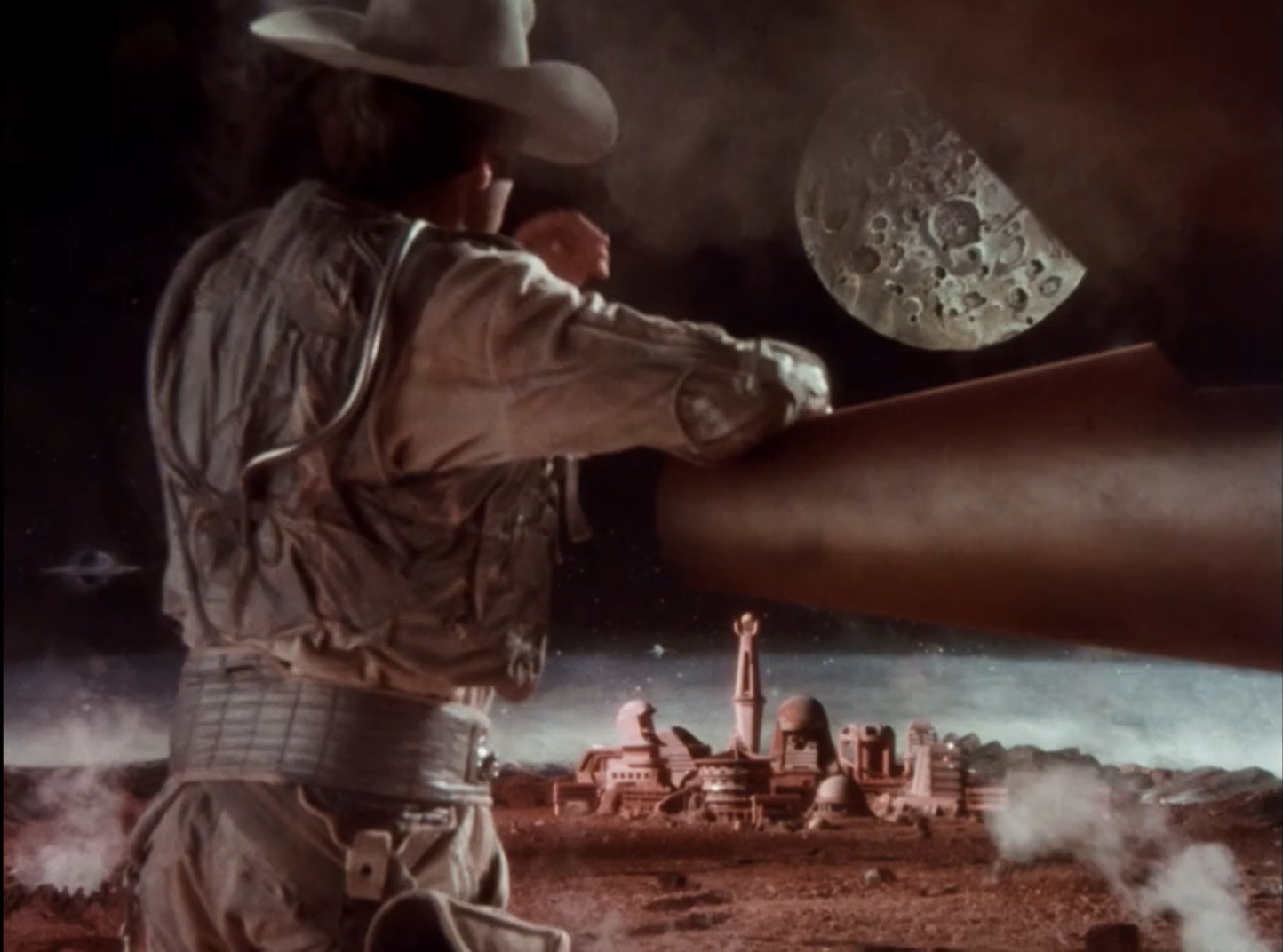
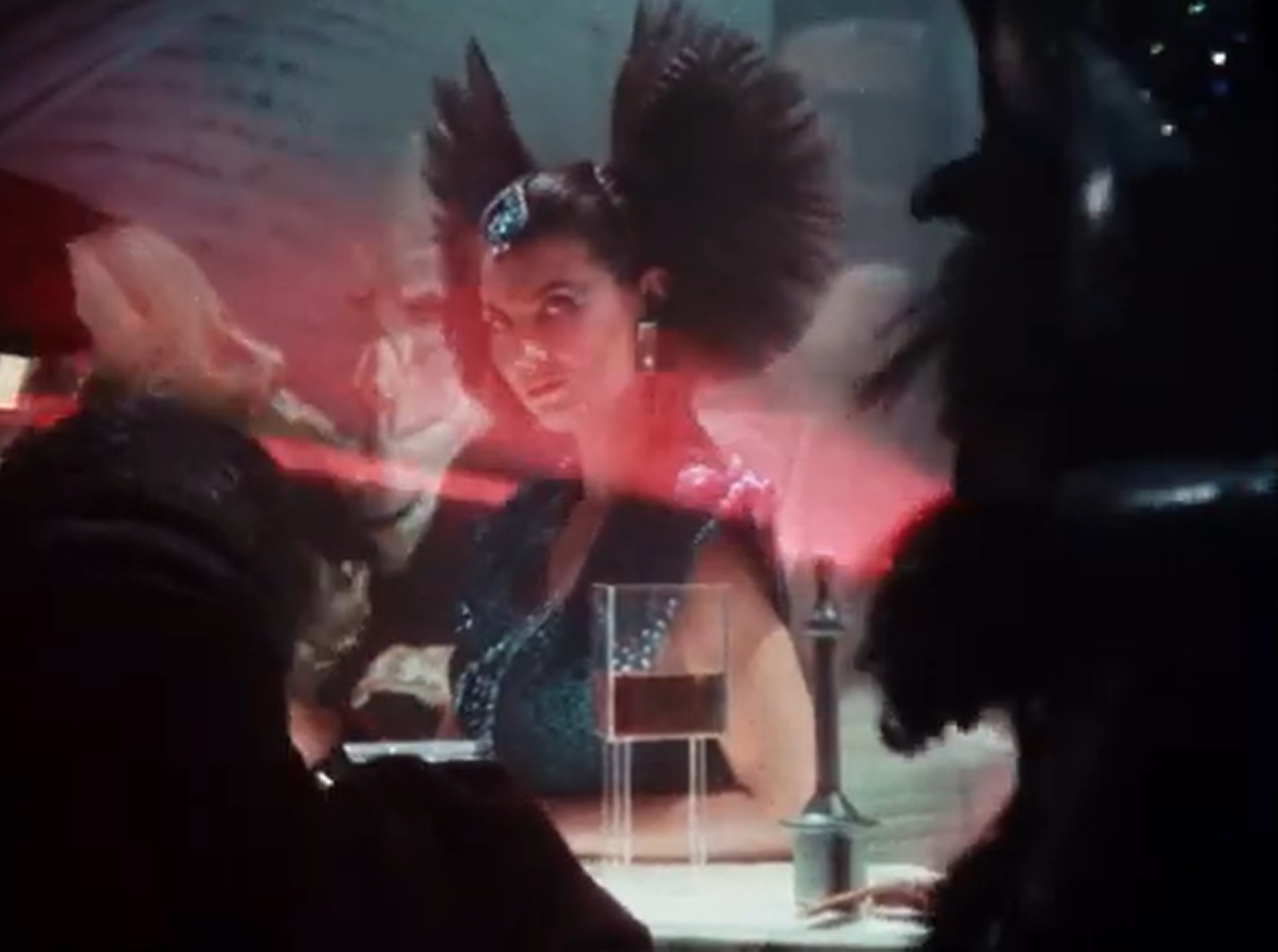
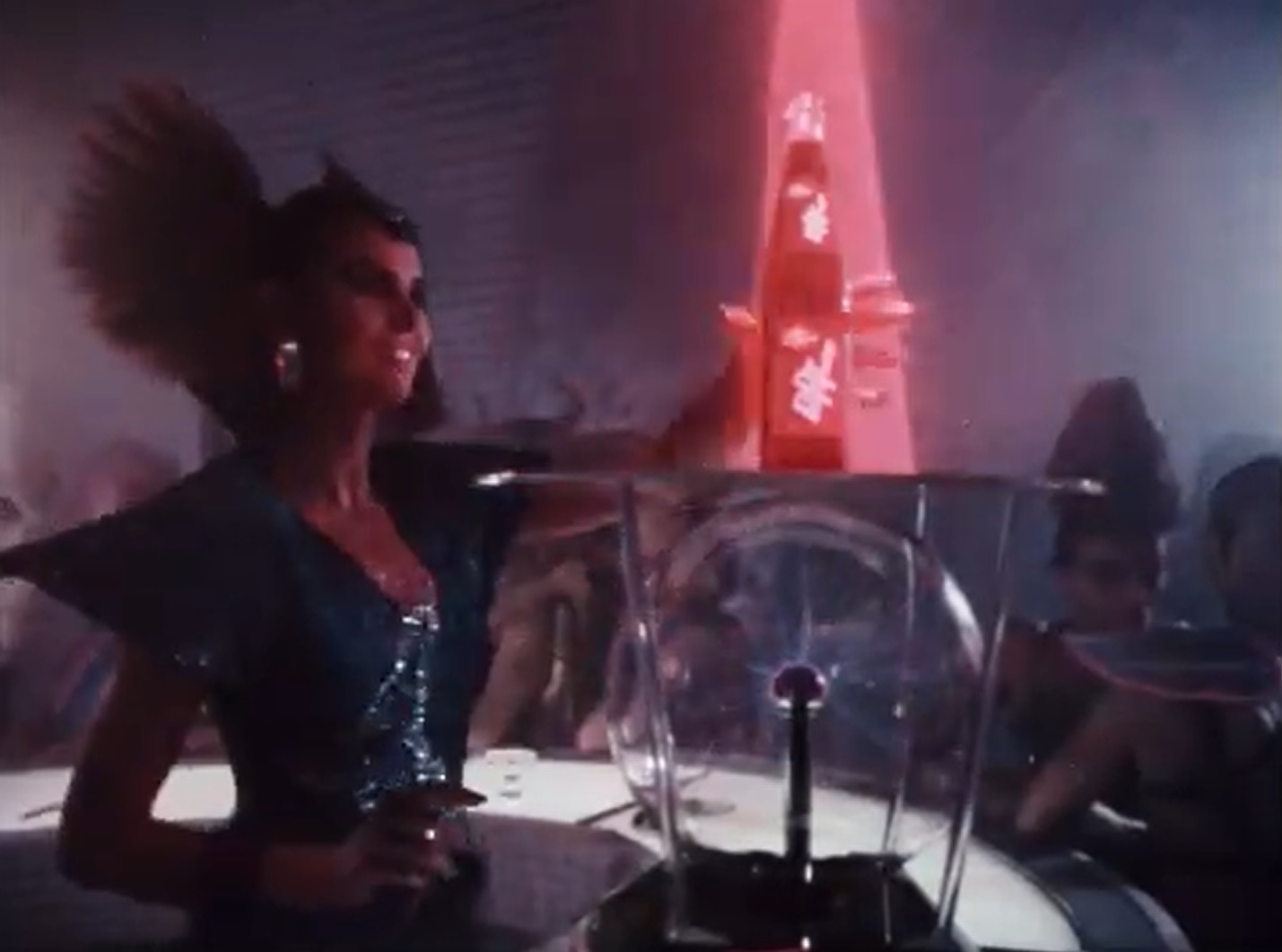
“A Far Star Bar,” Bob Brooks, 1984
Star Wars and the Cola Wars collided, launching a series of futuristic, high concept TV ads that included all the major players. At the heart of it was one Ridley Scott. By 1984, Scott was a big name in cutting-edge visual FX and dystopian sci-fi. 1982’s Blade Runner did not do well at the box office, but its look and mood defined a grimmer, grimier, yet somehow still seductive vision of the future. Scott spent his early career directing commercials in the UK before getting his break on 1979’s Alien (if the Nostromo had made it back to Earth, it would have docked in 2019 Los Angeles). Many of these spots have become famous, but not as famous as Apple’s Orwellian promo for the soon-to-be-released Macintosh, 1984’s “1984,” a hugely influential distillation of the dystopian theme and one of the most powerful advertisements ever devised. It only ran once, on January 22nd during Super Bowl XVIII, but once was enough.
In February of the same year, seven new Pepsi commercials hit the airwaves, part of a major new campaign to capture 18- to 25-year-olds, “the largest single age group with the highest per capita consumption,” as well as the demographic that happened to watch the most movies. This “new generation,” said one Pepsi VP, is “high-tech. It’s into computers, ingenuity, and lasers,” and identified with “flashier contemporary lifestyles.” The slick new slogan? “Pepsi: The Choice of a New Generation.” The stars of the bunch were two spots starring Michael Jackson and his brothers, which premiered on CBS during the ‘84 Grammys. The Jacksons got $5.5 million for the pair, and Michael was badly burned while filming the second ad at the Shrine Auditorium (he settled out of court with Pepsi for $1.5 million, donating the money to the hospital where he was treated).
But Pepsi also shelled out $2 million on five additional commercials that included “humorous take-offs” on three Steven Spielberg blockbusters: E.T., Jaws, and Close Encounters of the Third Kind. The last one, a Clio award winner, was directed by Scott. In it, a small-town boy plays frisbee with his dog in front of a diner. They’re interrupted by a luminous UFO—menacing music plays—that parks itself over adjoining Coke and Pepsi machines. The UFO coaxes one can of each soda up into the craft; there’s a beat for an unseen taste test before the landing lights shut off dramatically. When they switch back on, they’re spotlighting the Pepsi machine, which levitates slowly into the UFO before the craft jets off into a more refreshing universe. Martin Sheen debonairly recites the new slogan.
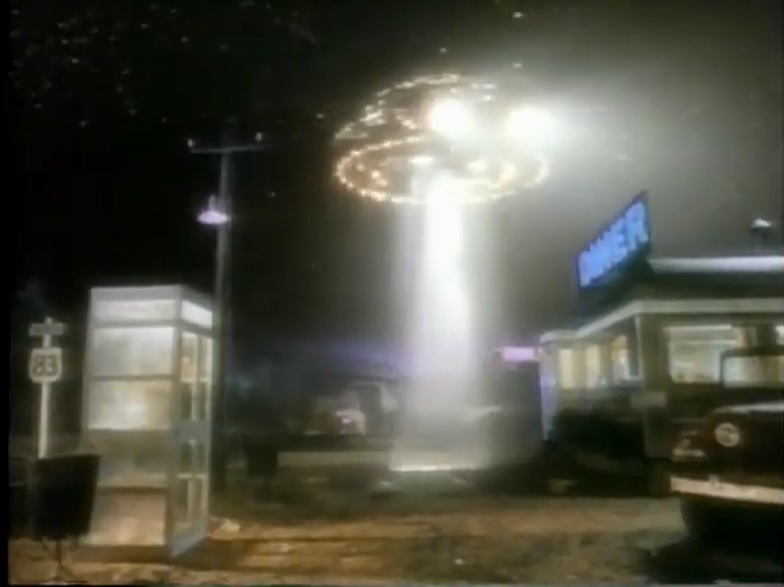
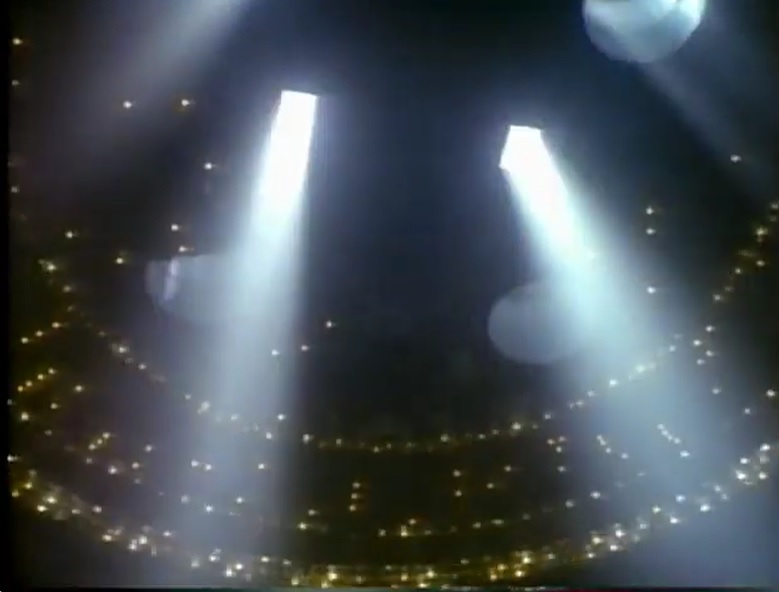
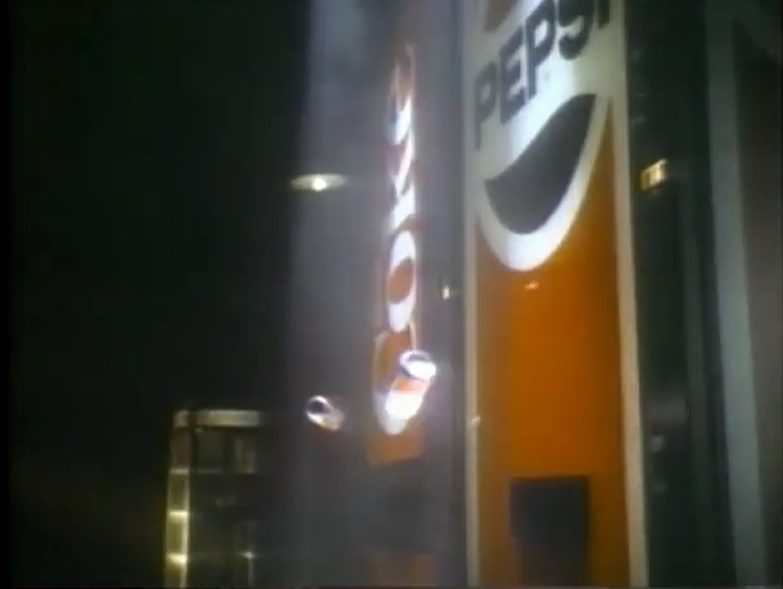
“Spaceship,” Ridley Scott, 1984
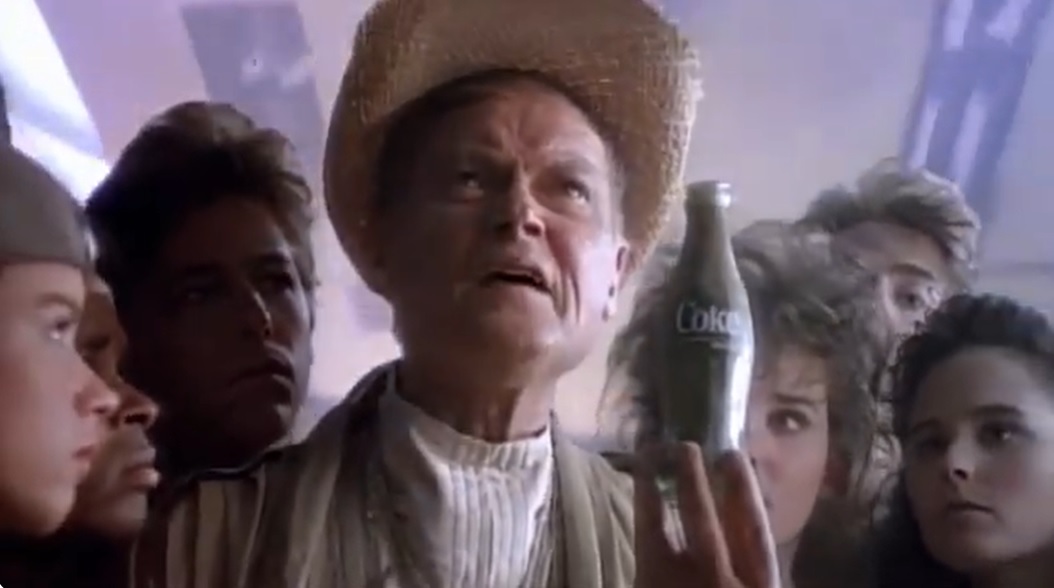
It’s a very effective ad that Pepsi topped in February of 1985 with a spot called “Archaeology,” which won multiple Clio awards and the Grand Prix at the International Advertising Film Festival. It was also voted the most popular commercial of 1985. The idea is simple enough: “Sometime in the Future,” a group of Pepsi-drinking archaeology students and their professor are investigating the dig site of a 20th century “split-level ranch.” They uncover a baseball and a guitar inside, which the professor knowledgeably and enthusiastically describes and explains, but when one of the students asks him what a bottle of Coke is, he stares at it with exasperation and admits, “I have no idea.” Pepsi wanted Scott for the job, but he was busy on a movie, so they turned to notable commercial director Joe Pytka, who was responsible for the brilliantly effective “Morning in America” ad for Reagan’s 1984 reelection campaign. Pytka wasn’t sure how to capture the futuristic elements in the script, so he contacted both Ralph McQuarrie (Star Wars concept art) and Syd Mead (Blade Runner concept art). McQuarrie ended up designing the “futuristic Pepsi truck,” but Mead’s suggestions were “too dark” for the cola company.
Pytka credits then Pepsi CEO Roger Enrico with both “changing advertising into pop art” and leveraging pop culture in advertising, but he didn’t quite understand how the sci-fi elements came into it: “I’m not sure this particular commercial fit the Michael Jackson, Madonna, concept, but it made a huge impact in the marketplace that transcended its original purpose.” Jackson himself certainly understood. A huge Star Wars fan, he would begin shooting Captain EO in July, a 3D space adventure made exclusively for Disney theme parks that was executive produced by George Lucas and directed by Francis Ford Coppola.
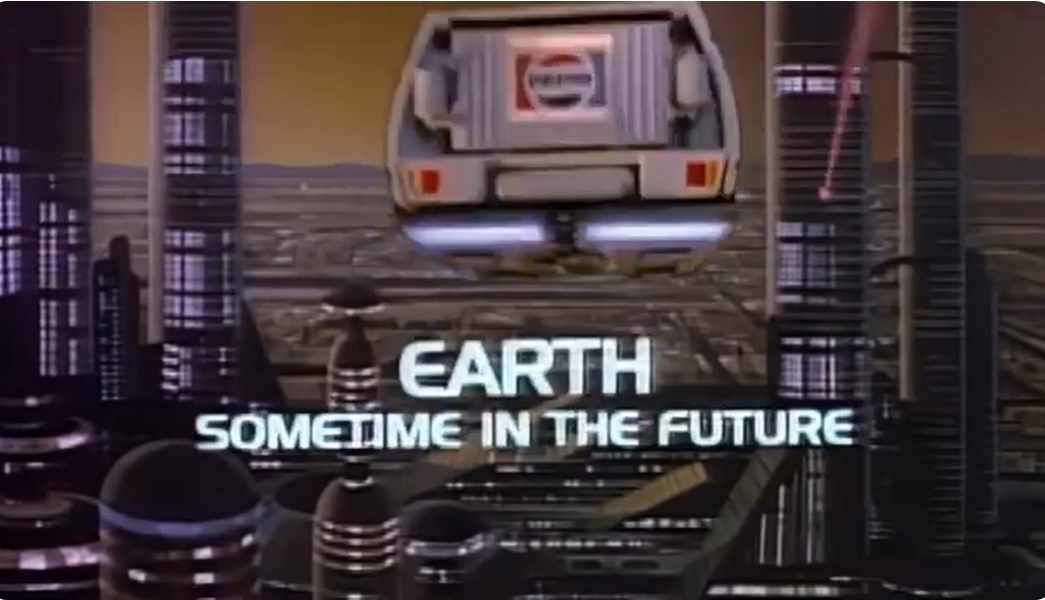
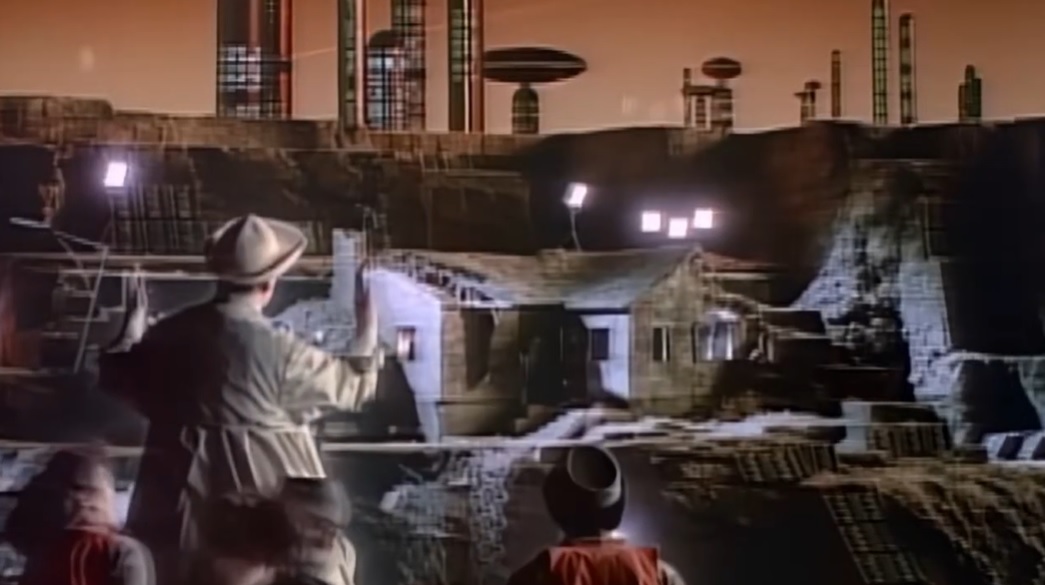
“Archeology,” Joe Pytka, 1985
In August of ‘85, another pop culture celebrity entered the Cola Wars: Godzilla. The King of the Monsters starred in two very tongue-in-cheek Dr. Pepper commercials in the lead up to Godzilla 1985, the American recut of the Japanese Godzilla 1984. In the first black and white spot, Godzilla tears apart Tokyo until he’s “appeased” by a giant full color can of the good stuff. The second picks up where the first left off, as the Big Guy spies a female Godzilla (she’s wearing a bow on her hairless forehead) who spurns his advances until he offers her a Diet Dr. Pepper—with a stripey straw inserted! These ads were part of Pepper’s original $10 million campaign that gave us the Space Cowboy, and because of the company’s significant investment in the Godzilla film, product placement ran rampant: the American characters drink copious amounts, and in one scene a glowing Dr. Pepper vending machine is all too prominent.
The conformist and happy-go-lucky ”Be a Pepper!” era was no more. The company was after the kids who thought Han Solo, Mad Max, and Snake Plysken were cool, and it was gaining ground. Young & Rubicam was hired to do yet another series of ads even more focused on sci-fi, including another 90-minute “mini-movie” called “Cola Wars,” which premiered in or around January of 1986; as before, shorter versions followed. The Space Cowboy was back, this time with a froglike alien sidekick we first saw as an extra in “A Far Star Bar.” We find out from some introductory text that we’re on “The Planet Dullzon / After the Cola Wars.” This time, the scene is distinctly post-apocalyptic: a broken overpass spans the toxic yellow-green horizon, overturned vehicles and debris are strewn across the ashen road, and bands of battletruck-driving marauders wearing spikes and hockey masks rule the land. The vibe is no longer Star Wars; it’s 1982’s Mad Max 2.
Our heroes meander into a ramshackle diner and ask the ‘50s-styled waitress for “somethin’ different.” The bad guys grab him: “The Cola Wars are over. There ain’t nothin’ different.” But the waitress does have something different, locked in a steel refrigerator marked “Clone Cola.” You know the rest. It’s not as strong as the first entry (both were directed by advertising trailblazer Bob Brooks), but it’s remarkable for its mood and setting. Around the same time, Coca Cola produced a six-minute short film called “The Route Warrior”—no subtlety there—that begins with a screen crawl: “On a remote sector of our planet at the height of the Cola Wars, renegade bands terrorized the roads in an attempt to block the delivery of a highly valuable and much sought after resource… Coca Cola.” It sounds fun, but what follows is a mostly tedious ad about a leather-jacketed Coke delivery guy who dodges inept marauders and does violence to anything that says Pepsi. There’s no evidence that the film ever got any kind of wide release, possibly because “somethin’ different” got there first.
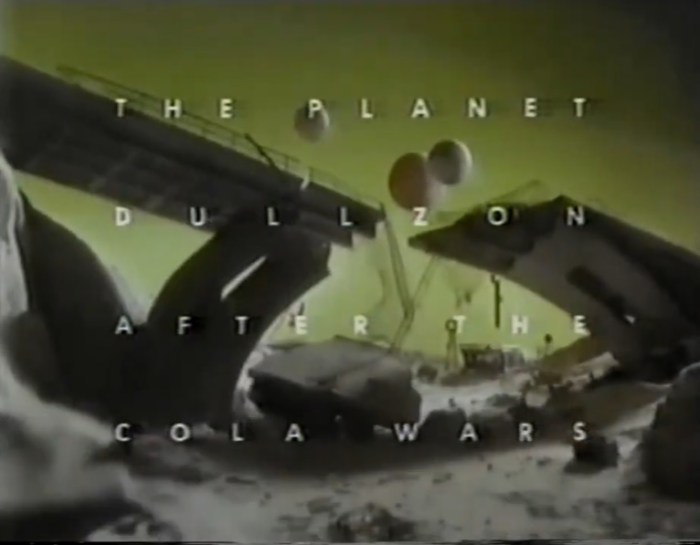
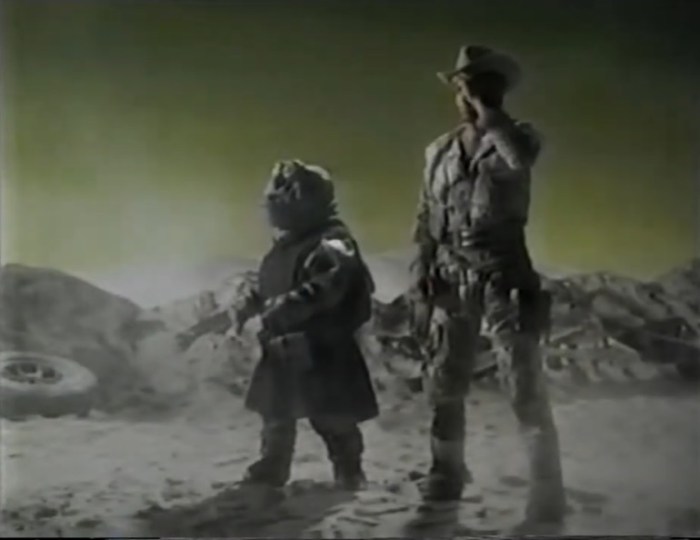
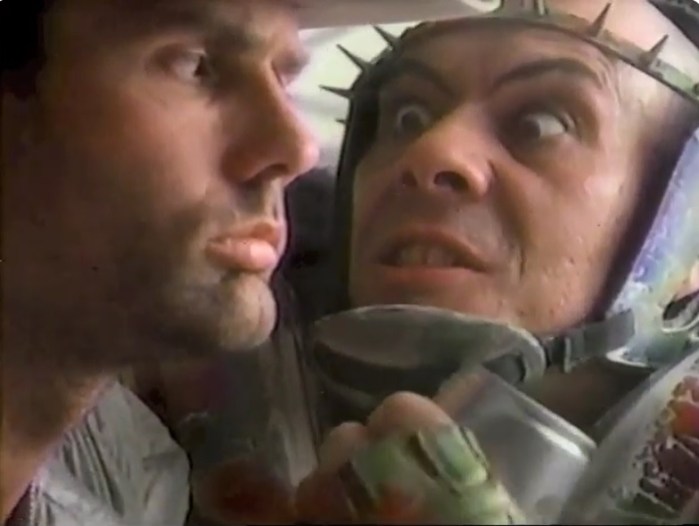
“Cola Wars,” Bob Brooks, 1986
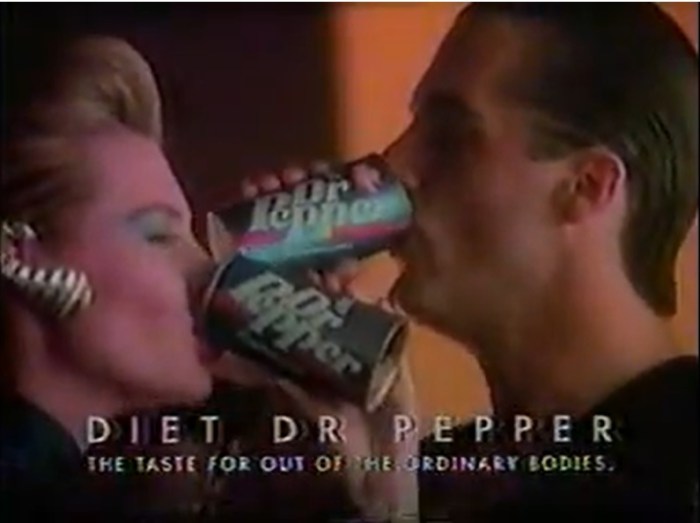
There were other standout ads in Dr. Pepper’s new batch, all of them airing in early 1986: “Colapolis” is inspired by Fritz Lang’s Metropolis and probably Scott’s “1984.” Slavish humans spend their days drinking “clone cola” until Space Cowboy and Frog face down laser-shooting robots and a forbidding mechanical Oz to liberate the “out of the ordinary,” much like the Macintosh would liberate the drab, emotionless masses in Apple’s ad. In “Star Gazers,” a bumpkin couple in a trailer park are content with their unsophisticated lifestyle and generic diet cola until visited by an extraterrestrial white monolith—surely a nod to 2001: A Space Odyssey—seeking “intelligent lifeforms.” They offer the alien one of their sodas and are promptly blown back into their lawn chairs. Water is changed into wine (Diet Dr. Pepper), and the hillbillies transform into snooty Ivy Leaguers with “a taste for out of the ordinary bodies.”
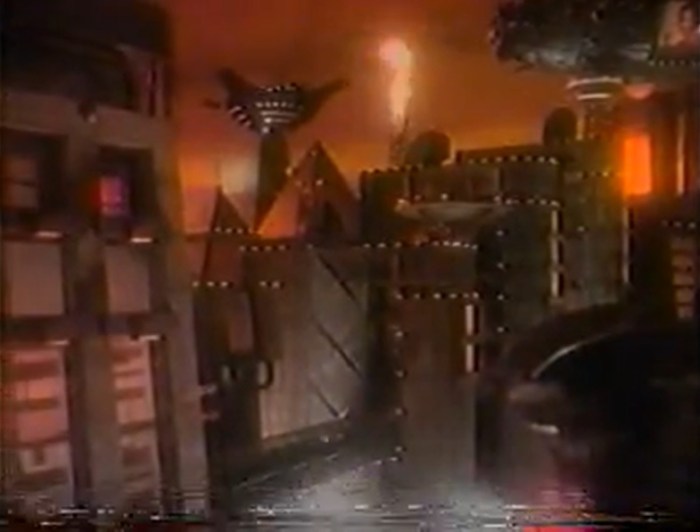
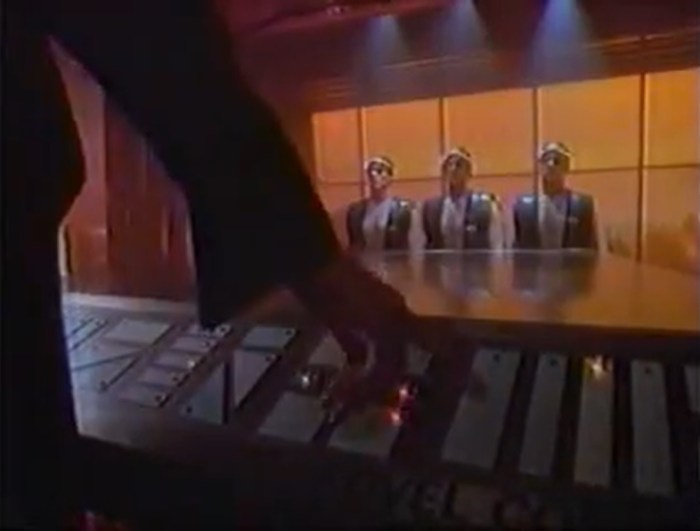
The strangest yet, “Droids,” is a straight-up spoof of Blade Runner that opens with a futuristic cityscape (there’s even a fire plume) and a blimp that intones, “Enjoy a vacation offworld on Colapolis… Relax, regenerate, rewind.” Inside a Tyrell-like office, a dapper Rachael stand-in faces three male humanoids wearing leather vests and light-pulsing headbands: “One is real. The others… machines.” She asks them a series of Voight-Kampff questions—”Your mother liberates your ant farm; how do you feel?”—as Vangelis-like music plays. She’s getting nowhere until she offers them diet cola. Two of them drink the generic brand; one of them requests a Diet Dr. Pepper. There’s a voiceover, punctuated by saxophone, as Rachael makes a beeline to her real man: “You can teach a machine to drink, but you can’t teach it taste.”
“Droids,” 1986
Why imitate an R-rated film that bombed at the box office to sell diet soda to sugar-addicted teenagers, most of whom had not seen the R-rated film? Or was the spoof aimed at adults who didn’t even get the reference? It could have been a marketing gaffe, but then again, the influence of Blade Runner had continued to seep into the wider culture throughout the decade, as a darker, more satiric sci-fi emerged. Also, Blade Runner itself played an important early part in the Cola Wars, a fact that surely rankled all but one soda maker. As Gaff and Deckard take a spinner through downtown LA on their way to Tyrell Corp, an animated Coca Cola ad spans the entire side of a building—just one of many things Scott got right about our hyper-capitalistic future. Unlike Dr. Pepper, though, Coke didn’t pay for the now famous product placement. It was Scott’s choice: “The message being… that even in a futuristic dystopian world, Coca‑Cola is everlasting.”
Despite the nod from Scott, Coke was slow to enter the sci-fi advertising market. When it did, it went all in. The inspiration was April 1985’s Max Headroom: 20 Minutes into the Future, a British TV movie very much influenced by the futuristic dystopian world of Blade Runner. Max’s world revolves entirely around television: giant networks own everything and wage war over ratings on an hour-to-hour basis using increasingly more targeted and subliminal advertisements to suck in more viewers, who have little to do but watch them. The streets are piled with what’s left of a collapsed civilization; only self-powered TV consoles remain, ubiquitous, propped up among the rubble.
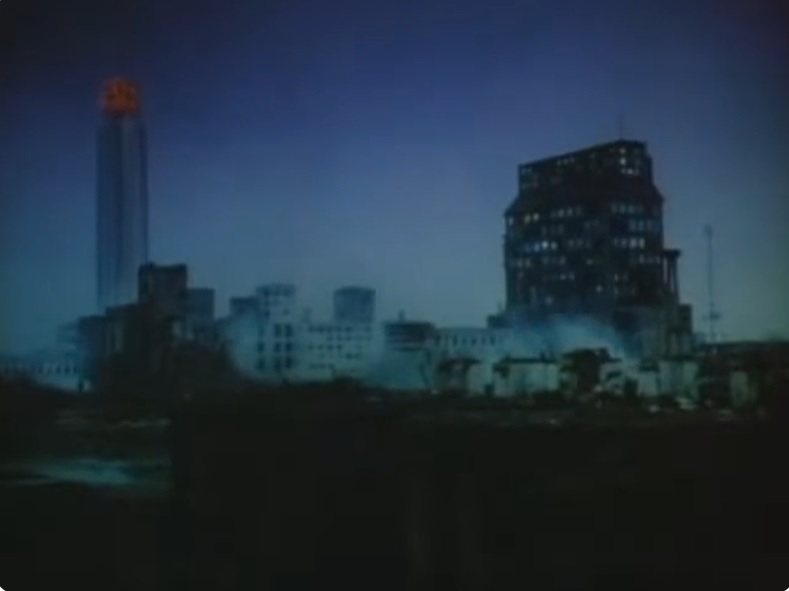
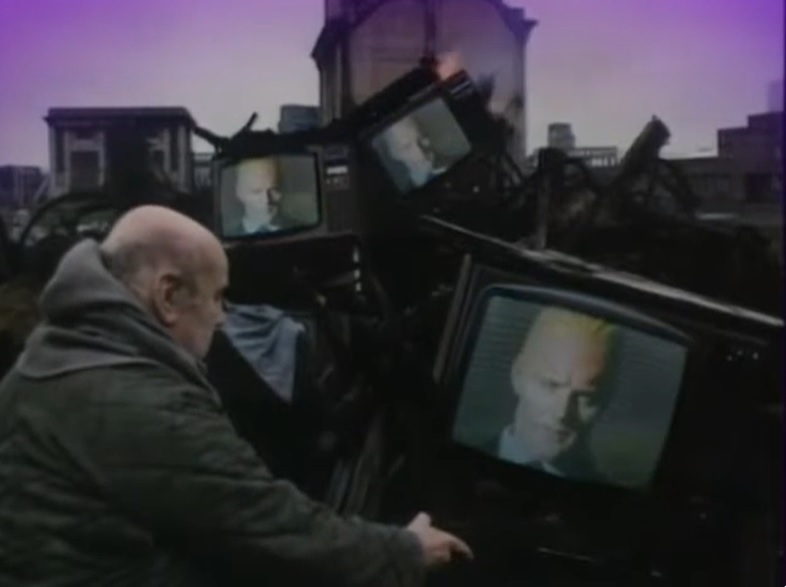
20 Minutes into the Future, Jankel and Morton, 1985
The film, an obvious polemic on American network television and the advertising industry that was directed by culture-jammers Annabel Jankel and Rocky Morton, was meant only to introduce the backstory of Max Headroom, who would premiere two nights later as the host of a music video program called The Max Headroom Show. In 20 Minutes into the Future and the American series that followed in 1987, Max is an AI version of crusading reporter Edison Carter (both are played by Matt Frewer) who exists only on TV and computer screens (though billed as a CGI character, Max was created using prosthetics and A/V recording gimmicks). He shares Carter’s sense of justice and outrage, but, lacking any real-world agency, can only express himself in glitchy, irreverent quips and comic banter.
In short, Max was called into creation to subvert and attack the very idea of the Cola Wars. Almost immediately, he was drafted into them. Before the American Max Headroom even premiered, Coke had invested $25 million into their new spokesman based on a series of commercials that ran in May of 1986 and placed first in viewer surveys. The first one takes place “Sometime Next Week”—definitely not “Sometime in the Future,” as in Pepsi’s “Archaeology” spot. A group of ‘80s-looking teenagers on bikes roams an industrial landscape that’s clearly modeled after 20 Minutes into the Future: it’s smoky, alternately doused in floodlights and buried in deep shadows, and littered with a combination of futuristic gadgets and obsolete tech. A heavy metal cube falls out of the back of a truck, and the scavenging kids jump on it. Max reveals himself on a secret monitor of the “process generator” and talks to the “Cokeologists” about the superiority of New Coke over Pepsi. “Let’s take him home,” one of the boys says, putting the generator on his bike. Max introduces the new slogan: “Catch the Wave. Coke.” The second commercial continues the story, with one of the kids from the first spot introducing his younger brother to the Max-in-the-box in his bedroom, a repository of the things he’s brought back from the junkyard world outside.
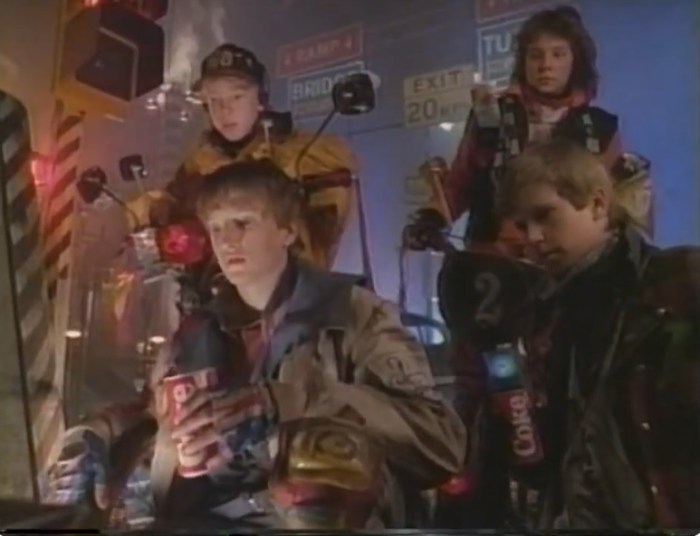
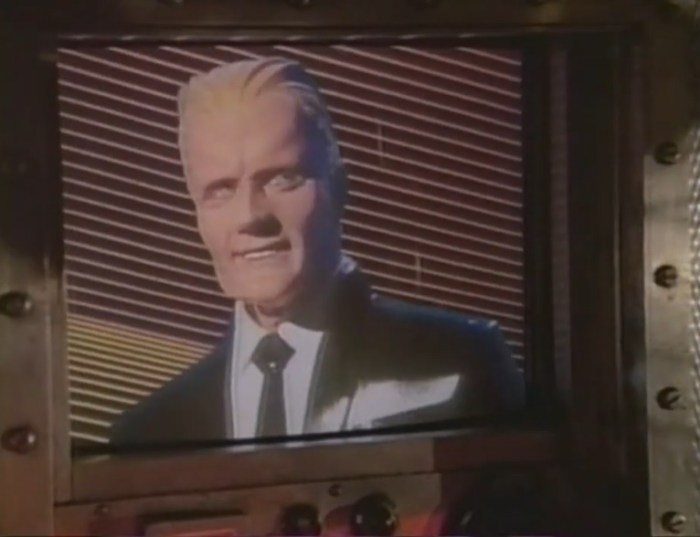
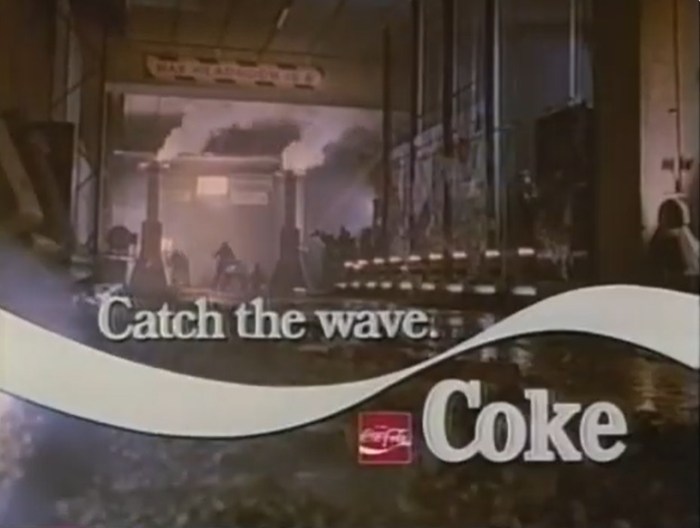
“Max – Truck,” Ridley Scott, 1986
These commercials were—to bring us back full circle—directed by Ridley Scott. (There’s a third ad, “Cokeologists Club,” that fits the theme of the first two and looks a lot like Scott’s work, but I can’t confirm that it is.) The irony of using Max to shill for cola could not have been lost on Coke, but, as a network exec admitted in an episode of the ABC series: “In our business, morals are one thing, but ratings are everything.” And the ratings didn’t lie. Max Headroom was a huge hit with teenagers—he seemed to exist exclusively for them, after all—and the computer age character gave Coke the lead in the never-ending battle to refresh the unquenchable American thirst.
To be clear, hundreds of unique commercials were produced and released by the major cola companies during the 1980s. Only a fraction of them referenced sci-fi in some way, and I’ve only covered a few of them here. But Dr. Pepper’s “A Far Star Bar” and the sophisticated productions that followed represented an evolution in the art of advertising. They targeted not just the “new generation” growing up in the ‘80s but a specific subset of that generation: those who understood the grammar, the tropes, and the underlying themes of science fiction, a genre that was itself rapidly evolving onscreen. The miraculous profitability of the original Star Wars, a children’s fairy tale set in outer space, enabled the cosmic pessimism of Alien and Blade Runner and the post-apocalyptic anti-fascism of Escape from New York (1981) and Mad Max 2, among many others. The kids on the bikes knew the truth: the bomb, in whatever form it ultimately took, could go off at any time, and we might be living in the ruins of 20 Minutes into the Future. But television and ice cold soda pop—the American Dream distilled—are everlasting.
 K.E. Roberts is Editor-in-Chief of We Are the Mutants and a freelance writer. He lives in Los Angeles and will never own a house.


