Reviews / June 29, 2026
 Atlantis
Paul Williams
Parry Music Ltd, 1987
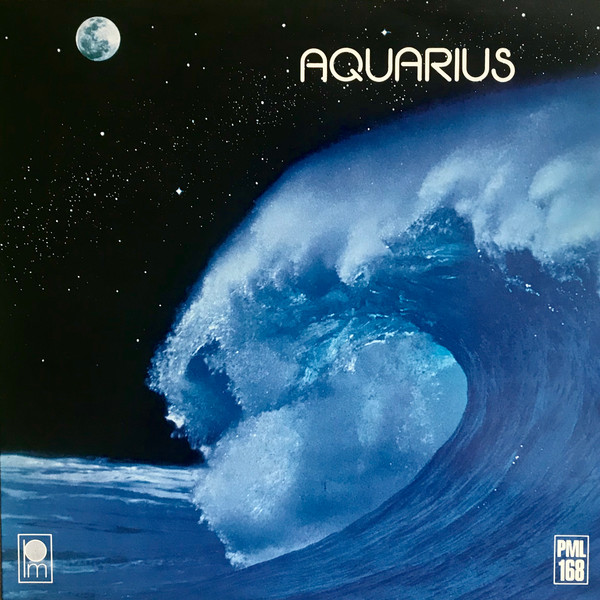
Paul Williams’ 1987 Aquarius is, simply put, one of the most beautiful library music albums ever made. It would never have been described that way when it came out, of course. Library or production albums were released exclusively to media producers who would buy certain tracks or entire catalogs to score commercials, TV and radio shows, films, documentaries, educational programming, and so on. And these were not the programs with the big budgets—totally the opposite. No, library music was “stock music,” strictly functional. To many in the “proper” music industry, it was disposable. In fact, labels literally threw away their entire vinyl collections in the ‘80s and ‘90s when CDs became the norm. Hip-hop and sample artists rescued them, and now we can appreciate the genre for what all musical genres are: a sometimes banal, sometimes enjoyable, sometimes sublime experience.
Library music is a genre that contains many genres, actually. My niche is summed up nicely by the description of Aquarius on the back of the sleeve: “Atmospheric music for underwater and space scenes.” Electronic music thrived in the 1970s and 1980s as synthesizers became more common (i.e. less expensive), and musicians both popular and avant-garde used them to explore or emulate the concepts of inner and outer space. After Star Wars, almost every library label had a category for what the UK’s Bruton Music Library called “Futuristic, Electronic.” Canada’s Parry Music, the country’s largest label at the time and the publisher of Aquarius, called it “Electronic, Scientific/Hi-Tech/Space.”
British pianist and composer Paul Williams started contributing to the Parry label in the late ‘70s, featuring heavily on Voices and Vistas (both 1986), where his choral, contemplative sounds prefigured what was to come. Aquarius was Williams’ first solo work for Parry, and the album was made entirely with a Kurzweil K250, a landmark synthesizer with a built-in sampler and 12-track sequencer, “in a garden shed in mitcham [sic] Surrey…” First track “Poseidon” sets the stage with a foreboding, minor key build of harmonizing choir tones and tolling bells—the choir preset on the K250 was revolutionary and makes frequent appearances on synthy, ambient, and New Age tracks of the era. These ethereal voices echo throughout the album and sustain the theme: the strange and magical interplay between oceanic and cosmic forces.
Unlike most library music, Aquarius is a complete work in itself. It’s like a soundtrack to an imaginary film, and Williams uses both traditional and experimental arrangements to tell the story. “Drifting in Time” is a lush underwater piece steeped in reverb (most of the album is thus steeped), with sparkling high notes in the background that sound like droplets of crystal. “Angelica,” less than two minutes long, is a haunting, slowly resolving jazz progression—although Williams makes jazz sound like music from another world. Harmonizing choral melodies make a return on “The Sirens,” the longest track on the LP and a convincing attempt to imagine the songs of the mythic creatures. Penultimate track “Starfish” is bright and innocent: a few major chords alternate while scales and arpeggios run over top, and “Solar Tides” returns to the darker mood of “Poseidon,” a layered choral finale with shimmering tremolo on the melodic line.
Many of the tracks on Aquarius were reused on subsequent Parry albums, especially New Vistas (1987), “Broad, impressive, tranquil and dramatic moods for panoramas, seascapes, space and underwater scenes”; and Atlantis (1989) and Atlantis 2 (1995), “Explorations into the past, the future and the unknown.” All of the collections are interesting and cover similarly airy territory, but I’m drawn mostly to the new tracks by Williams, and there are several. He just has a way of making “Cold Lake” sound like a cold lake, or “Cosmic Mist” sound like cosmic mist, which is probably how we started making music in the first place: imitating nature, trying to voice the unknown and the unknowable. The line between library and ambient is often drawn with smoke, and I would call Aquarius an accidental ambient masterpiece. It could be longer—I wish it were—but what Williams gave us will last me, at least, a lifetime of listening.


